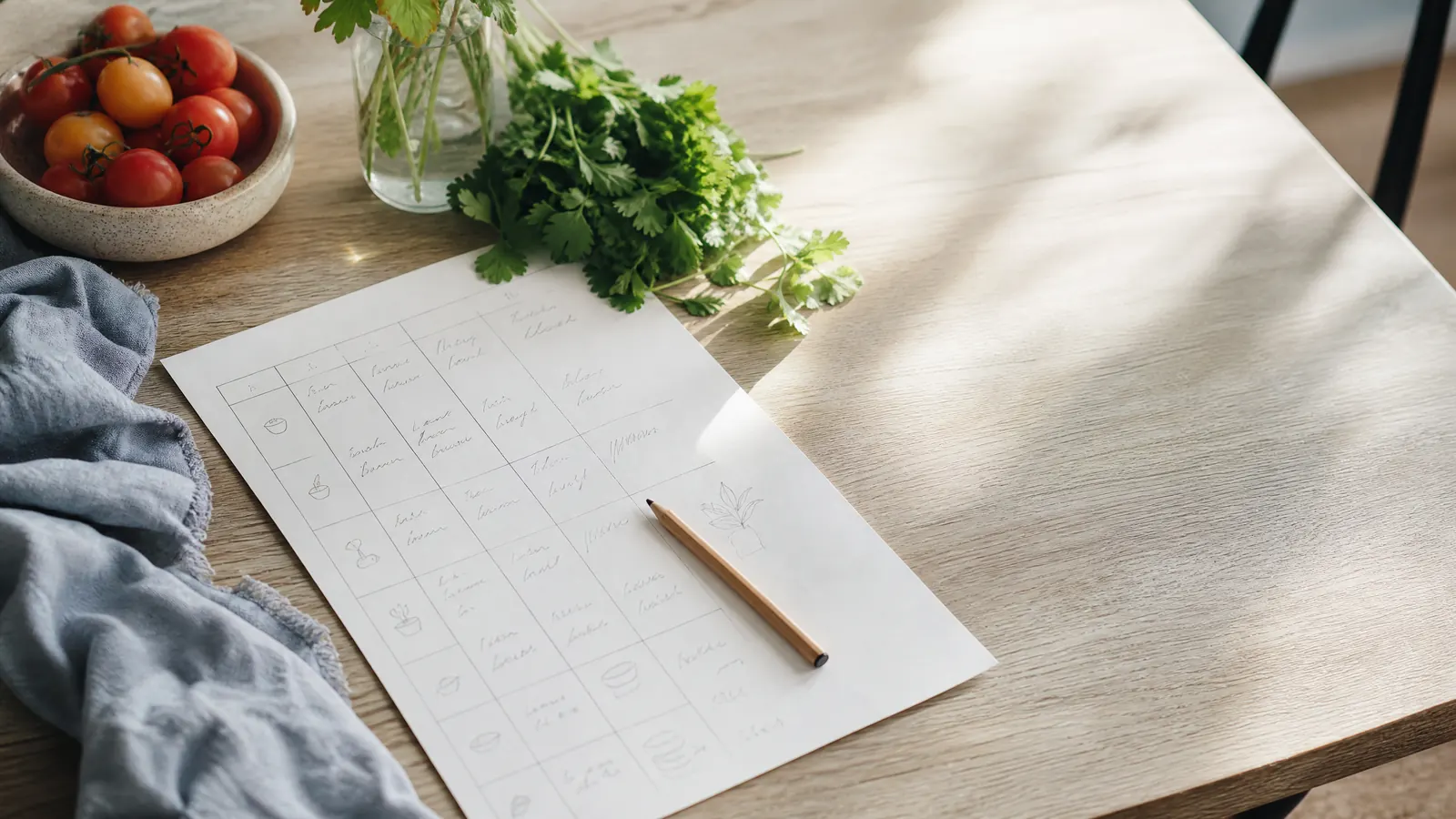
A useful meal plan is a decision-support tool, not a rigid schedule. It can lower last-minute choices while leaving room for leftovers, busy evenings, and ingredients already on hand.
Step-by-step
Start with the calendar
Mark nights when cooking time will be limited and choose simpler options for those days. Plan more involved meals only when you have the time and energy for them.
Choose a small set of meal types
Select a few familiar categories, such as one sheet-pan meal, one soup, one flexible grain bowl, and one leftovers night. Repetition reduces shopping complexity.
Check what you already have
Look through the refrigerator, freezer, and pantry before making a list. Build a meal around items that should be used first.
Write an adaptable shopping list
List ingredients by store section and include substitutions you would accept. This makes the plan more resilient if something is unavailable.
Helpful tips
- Plan a leftovers night before shopping.
- Keep two low-effort backup meals in the freezer or pantry.
- Use one main ingredient in more than one meal to reduce waste.
Common mistakes
- Scheduling seven complicated dinners in a busy week.
- Buying ingredients without a likely use.
- Treating a missed meal as a failed plan instead of adjusting the sequence.
Before you continue
- Follow safe food-handling guidance for storage, cooking, and reheating. When in doubt about food safety, consult a trusted local public-health source.
Questions answered
How far ahead should I meal plan?
A week is manageable for many households, but a shorter plan can work better during unusually busy periods or when produce availability is uncertain.
Do I need exact recipes for every meal?
No. A meal type plus a few core ingredients can be enough, especially for flexible meals such as bowls, soups, or salads.
This guide is general informational content. It does not replace professional advice for legal, medical, financial, safety, or other consequential decisions.