Quick answer
Use the descaling or cleaning product recommended for your coffee-maker model, then run the required number of plain-water rinse cycles. Wash removable parts with mild dish soap, and avoid using household substitutes unless the manual specifically approves them.
Coffee oil and mineral deposits affect flavor and can slow a machine over time. Vinegar is not the only option, and it is not suitable for every model. The safest route is the cleaning method listed in your coffee maker’s manual.
Step-by-step
Find the model’s cleaning instructions
Check the manual or manufacturer support page for descaling intervals, compatible cleaners, and rinse requirements. This matters because machine materials and sensors vary.
Unplug, cool, and empty the machine
Turn the coffee maker off, let hot components cool, discard grounds, and empty the carafe and reservoir before cleaning removable parts.
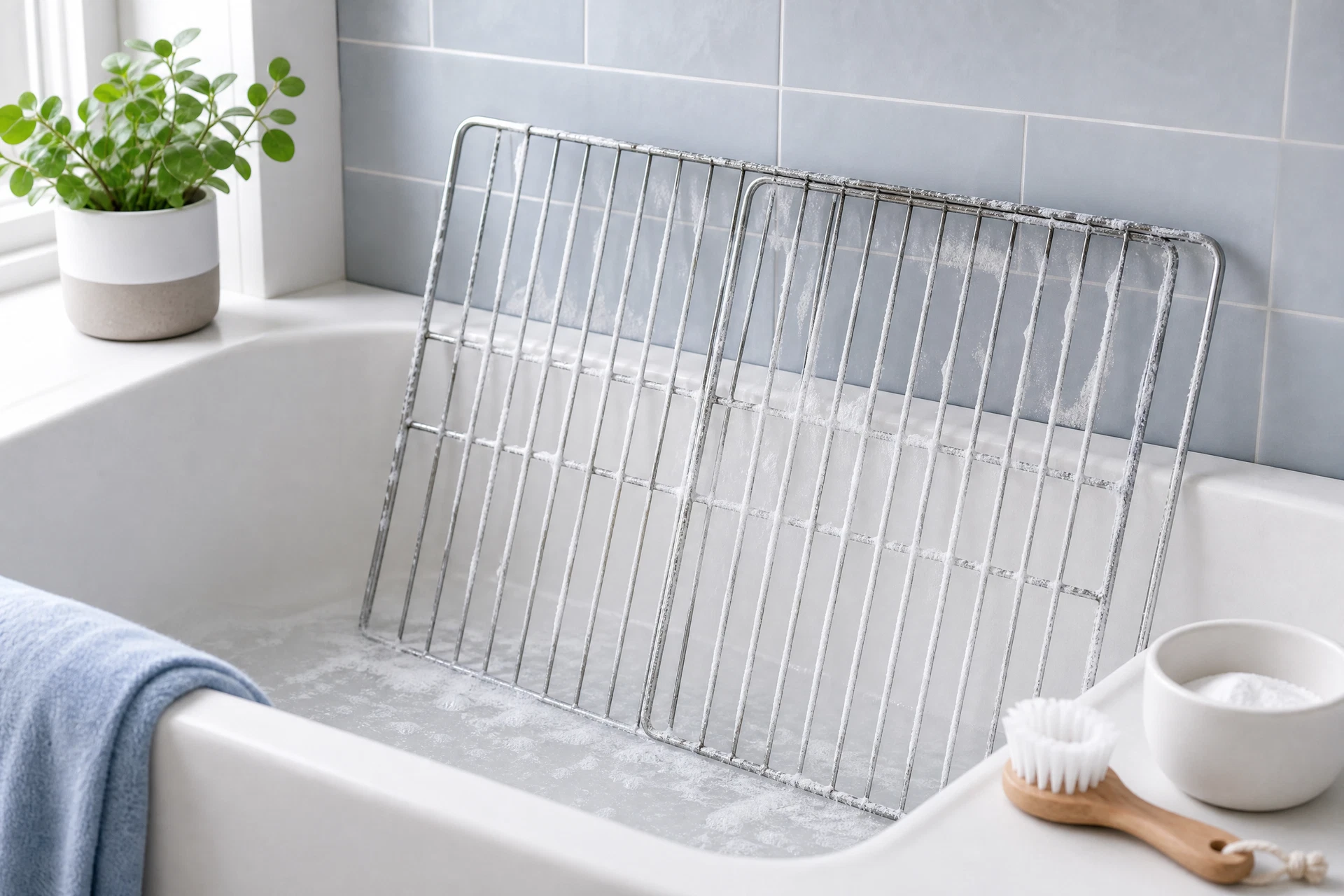
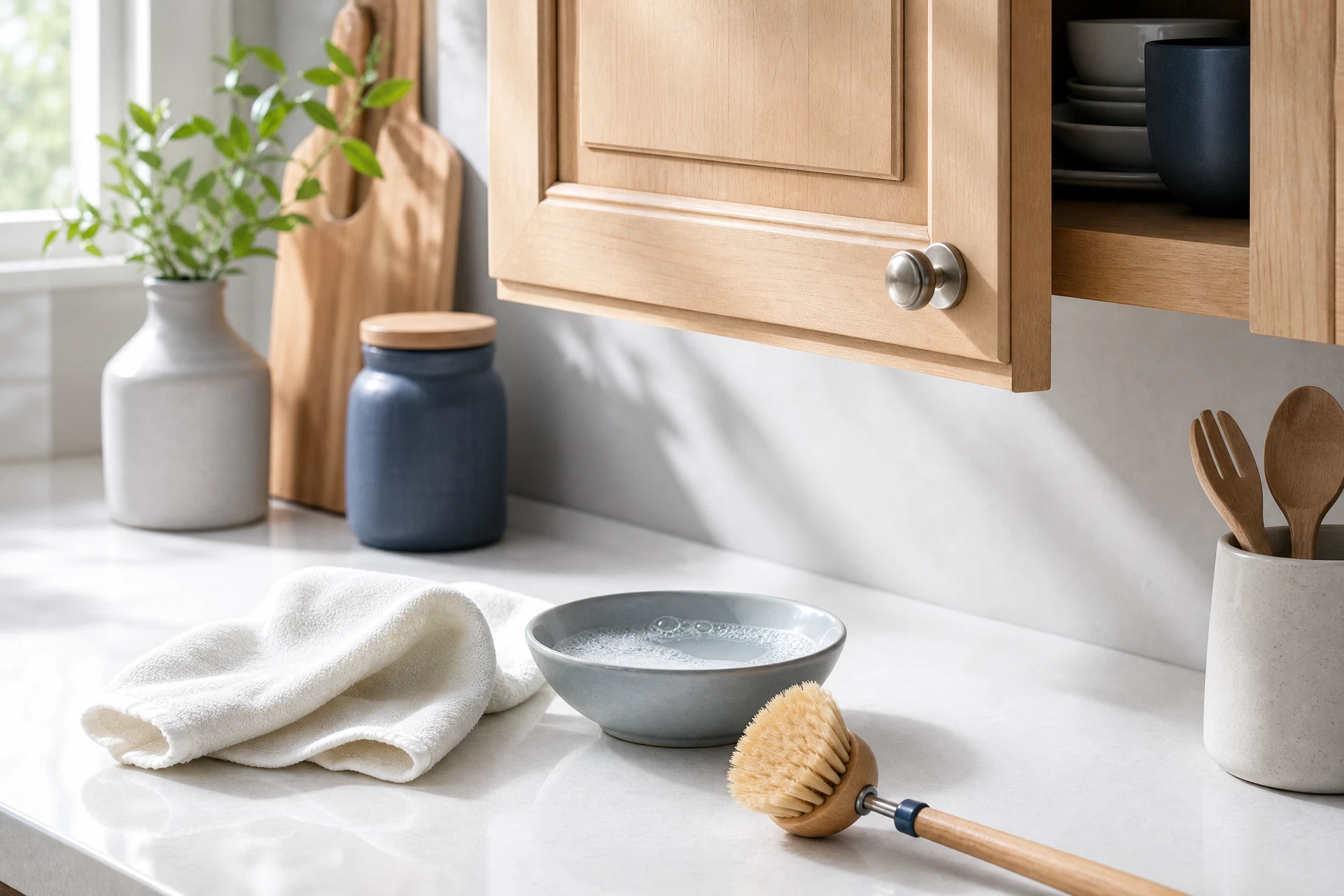
Wash removable parts with mild soap
Clean the carafe, filter basket, and removable lid with warm water and mild dish soap. Rinse well so soap does not affect the next brew.
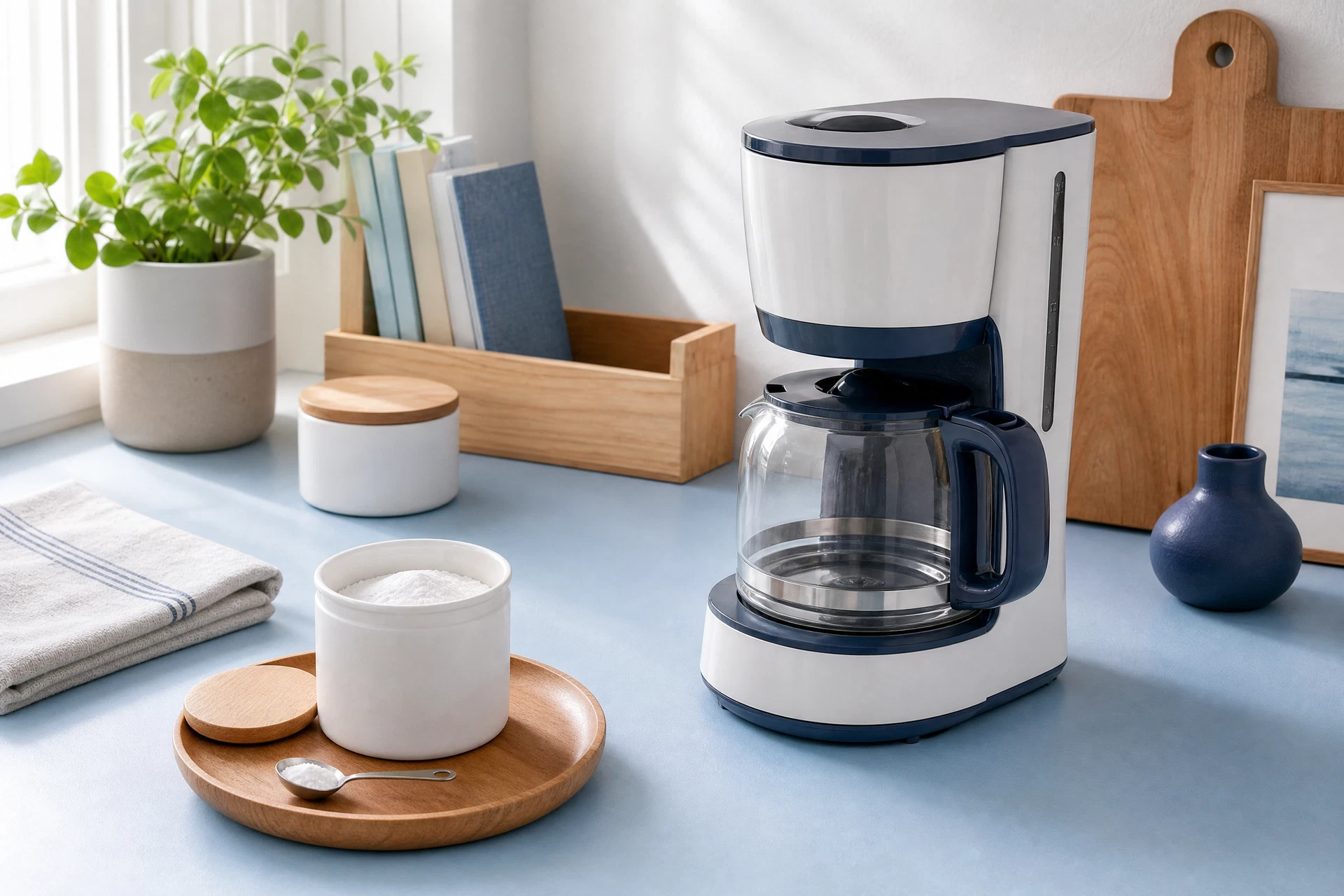
Run the approved cleaning or descaling cycle
Prepare the recommended solution exactly as directed and start the model’s cleaning cycle. Do not guess concentrations or substitute cleaners across brands.
Flush with plain water
Run the full number of water-only cycles specified in the manual. Smell and taste should return to normal before you brew coffee for drinking.
Set a simple maintenance reminder
Use your water hardness, brewing frequency, and the machine’s indicator light to decide when to repeat the process. Wiping spills after use also reduces buildup.
Helpful tips
- Use fresh water for every rinse cycle instead of reusing the same carafe water.
- Wipe the warming plate only after it has cooled.
- Keep the reservoir lid open briefly after cleaning if the manual permits it, so trapped moisture can evaporate.
Common mistakes
- Using a cleaner not approved for the appliance.
- Stopping after one rinse when the manual calls for several.
- Submerging the electrical base in water.
Before you continue
- Unplug the machine before wiping the base or heating plate.
- Stop and seek manufacturer guidance if there is leaking, an error light that remains on, or an unusual electrical smell.
When the first attempt does not work
The coffee still tastes like cleaner after rinsing. What should I do?
Run additional plain-water cycles and check that you used the correct product and amount. Do not drink coffee with an unusual chemical taste.
The clean light stays on after I follow the instructions. Why?
Many models require a specific sequence to reset the reminder. Consult the manual before repeating the cycle or pressing reset controls.
Continue with a related guide
Questions answered
What can I use instead of vinegar to clean a coffee maker?
The best alternative is the descaling or cleaning product approved by the machine manufacturer. This avoids leaving incompatible residue or odors.
How often should I clean a coffee maker?
Wash removable parts frequently and descale according to the manual, local water hardness, and the machine’s maintenance indicator.
Can I put coffee-maker parts in the dishwasher?
Only if the manual labels them dishwasher-safe. Heat and detergents can affect some lids, carafes, and filter assemblies.
This guide is general informational content. It does not replace professional advice for legal, medical, financial, safety, or other consequential decisions.