Quick answer
Let the oven cool completely, remove racks as your manual allows, place them on a protected surface, apply a baking-soda paste or soak method, wait for residue to soften, scrub with a non-scratch tool, rinse thoroughly, and dry before reinstalling.
Oven racks collect baked-on grease where a normal wipe cannot reach. Baking soda can help soften ordinary residue, but the safe method is still slow: protect the work area, avoid scraping coatings, and follow the oven maker’s instructions for rack removal.
Step-by-step
Check the oven manual and cool the appliance
Some racks have coatings or guidance that limit soaking methods. Wait until the oven and racks are fully cool before handling them.
Protect the work surface
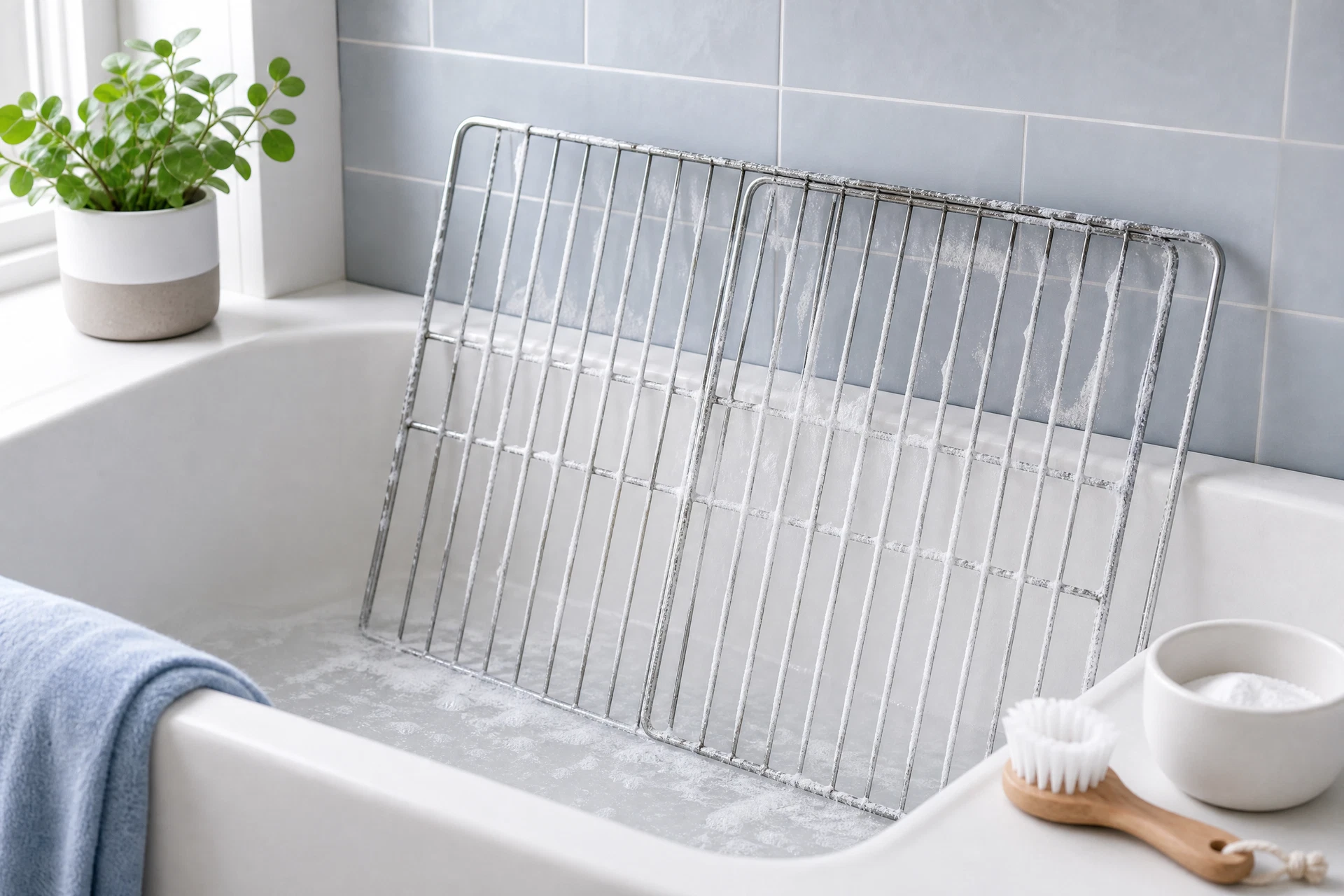
Lay towels in a tub, large sink, or other safe work area. This cushions the racks and protects surfaces from scratches or residue.
Apply a baking-soda paste or approved soak
Mix baking soda with a small amount of water to make a spreadable paste, or use a contained soak that fits the racks. Do not mix it with other cleaners.
Give residue time to soften
Allow time for the paste or soak to work rather than immediately scrubbing hard. Check periodically and keep the mixture from drying into an unmanageable crust.
Scrub gently with a non-scratch tool
Use a nylon brush, sponge, or plastic scraper to lift softened residue. Repeat the gentle process for stubborn spots instead of reaching for steel wool or a knife.
Rinse, dry, and reinstall carefully
Rinse all grit away, dry the racks completely, and return them only when the oven interior is also dry and cool. Check that racks slide normally before cooking.
Helpful tips
- Clean racks before residue becomes thick and carbonized.
- Work outside or in a ventilated space if rinsing large, greasy racks.
- Use a separate brush for oven cleaning so grit does not move to cookware.
Common mistakes
- Mixing baking soda with vinegar or commercial oven cleaner in the same session.
- Using a steel-wool pad on a rack with a special finish.
- Reinstalling wet racks, which can leave moisture in the oven.
Before you continue
- Do not use a self-cleaning cycle with racks inside unless your oven maker explicitly allows it.
- Stop if rack plating flakes or the rack bends; replacement guidance may be safer than continued abrasion.
When the first attempt does not work
The baked-on residue will not lift. What should I do?
Repeat a gentle soak or paste cycle and check the manufacturer’s approved cleaning method. Do not escalate to harsh chemicals or abrasives without confirming they are safe for the rack finish.
My oven racks no longer slide smoothly. Why?
Residue, bent rails, or inappropriate cleaners can affect movement. Wipe the rack supports clean and consult the manual before applying lubricants or forcing the rack.
Continue with a related guide
Questions answered
Can I clean oven racks in a bathtub?
A protected tub can provide room for a contained soak, but protect the surface, keep drains clear, and rinse residue thoroughly afterward.
Does baking soda damage oven racks?
Baking soda is generally mild, but rack finishes vary. Check the manufacturer guidance and test a small area rather than assuming every rack is the same.
How often should oven racks be cleaned?
Clean them when grease or residue begins to affect use or smoke during cooking. Regular light cleaning is easier than occasional heavy restoration.
This guide is general informational content. It does not replace professional advice for legal, medical, financial, safety, or other consequential decisions.