Quick answer
Start with warm water, a small amount of dish soap, and a soft microfiber cloth. Test a hidden spot, wipe a small area at a time, then dry the cabinet promptly. Use a product made for the finish only if gentle cleaning does not lift the grease.
Cooking vapor can leave a sticky film on cabinets near the stove, even when the kitchen looks clean. The key is to remove grease gradually without soaking seams, dulling paint, or stripping a wood finish.
Step-by-step
Identify the cabinet finish and test first
Painted, laminate, and wood cabinets react differently. Choose a hidden lower edge and test your method before applying it across a visible door.
Remove loose dust and crumbs
Wipe the door and handle with a dry microfiber cloth. Starting dry prevents grit from becoming an abrasive paste when moisture is added.
Mix a mild cleaning solution
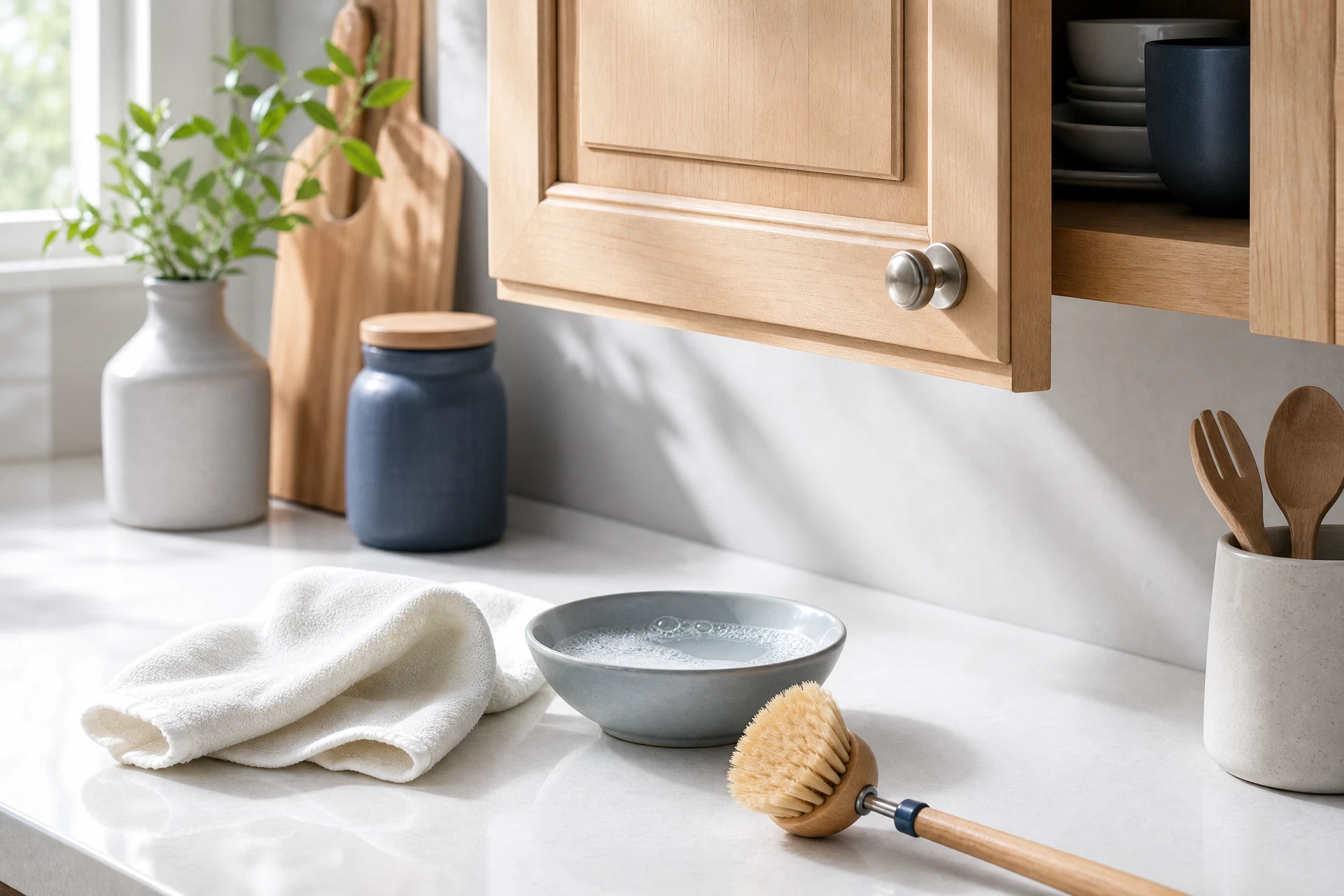
Use warm water with only a small amount of dish soap in a bowl. Dampen, rather than soak, a soft cloth and wring it out well.
Work in small sections
Wipe with the grain on wood or in straight passes on painted and laminate doors. Turn the cloth often so you lift grease instead of smearing it.
Address stubborn film carefully
If mild cleaning is not enough, use a finish-appropriate cabinet cleaner according to its label and your test result. Do not jump to harsh solvents or abrasive pads.
Wipe clean and dry immediately
Use a fresh damp cloth to remove residue, then dry the surface, hinges, and edges. This reduces the chance of streaking or moisture entering seams.
Helpful tips
- Clean handles and the cabinet above the stove more often than distant doors.
- Run a range hood or open ventilation while cooking to reduce future film.
- Use two cloths: one for cleaning and one for drying.
Common mistakes
- Spraying cleaner directly into cabinet seams.
- Using scouring pads or strong solvents without a finish test.
- Leaving a soapy film behind, which can feel sticky and attract more dust.
Before you continue
- Stop if paint lifts, the finish turns cloudy, or veneer appears loose.
- Do not mix cleaners or use a degreaser that the cabinet maker advises against.
When the first attempt does not work
The cabinets still feel tacky after cleaning. What should I do?
Wipe with a clean damp cloth to remove leftover soap or cleaner, then dry. If tackiness remains, test a finish-safe cabinet product on a hidden area before treating more surface.
The finish looks dull after I cleaned it. Can I polish it?
First stop using the current method and let the cabinet dry fully. Check the cabinet manufacturer’s care guidance before applying polish; some products can create buildup or change sheen.
Continue with a related guide
Questions answered
Can I use vinegar on kitchen cabinets?
Some finishes tolerate diluted vinegar while others can be affected by repeated acidic cleaning. A mild dish-soap solution is a safer first step unless the manufacturer says otherwise.
How often should I degrease cabinets?
Wipe high-use areas regularly and do a fuller clean when you feel a film. Kitchens with frequent frying may need attention more often.
Can I use baking soda on cabinets?
Baking soda can be mildly abrasive. Avoid scrubbing it into delicate finishes unless a manufacturer-approved method specifically calls for it.
This guide is general informational content. It does not replace professional advice for legal, medical, financial, safety, or other consequential decisions.