Quick answer
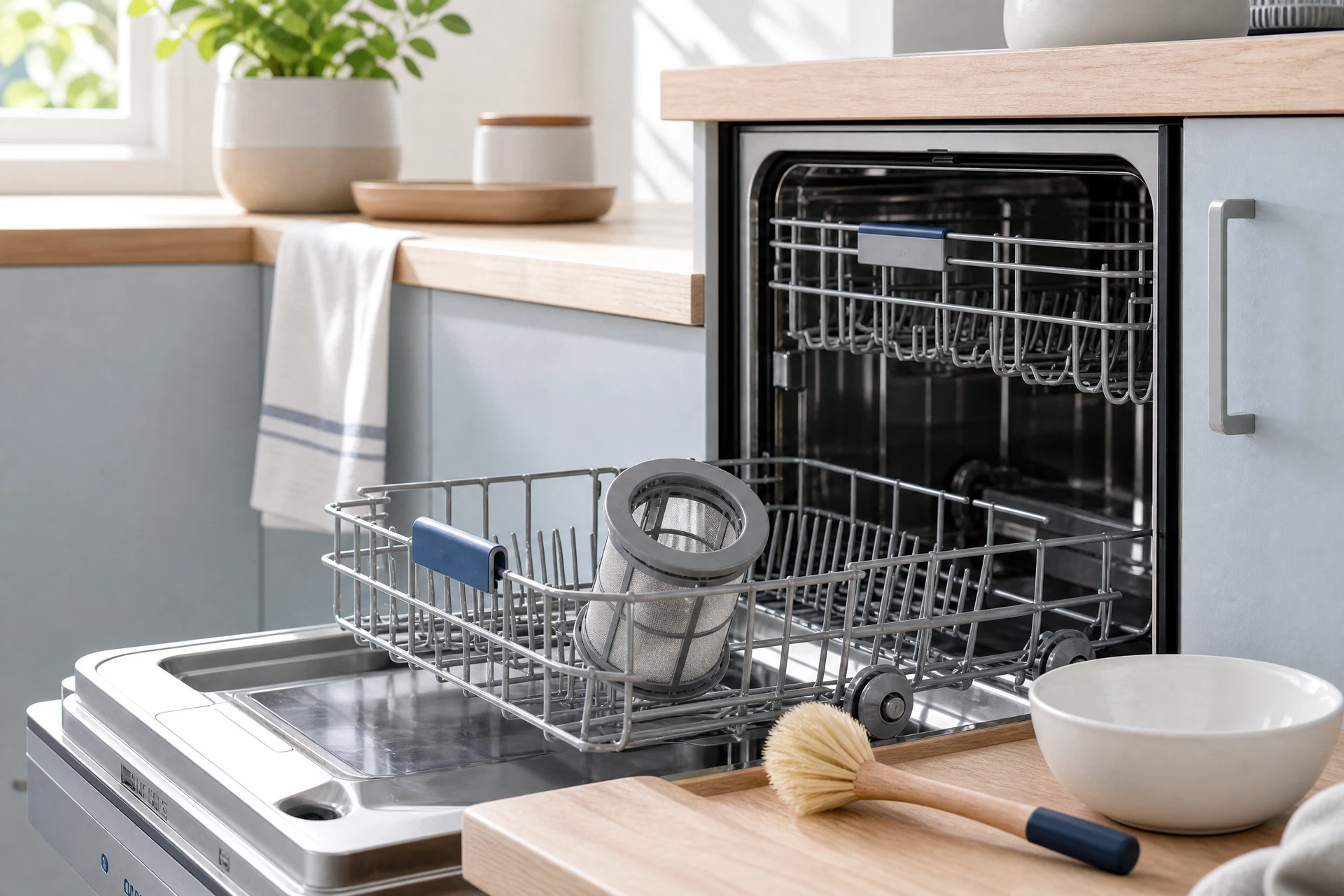
With the dishwasher empty and cool, check the manual, remove the filter only if it is designed to come out, rinse it under warm water with a soft brush, clear loose debris from the tub, and reinstall it securely before running a manufacturer-approved cleaning cycle.
Dishwashers clean better when water can move through the filter and spray arms freely. A small amount of food debris is normal, but a neglected filter can contribute to odors, residue, and slow drainage.
Step-by-step
Check the manual and let the appliance cool
Filter designs differ. Find your model’s cleaning instructions before turning or lifting a part, especially if the filter appears fixed in place.
Remove the bottom rack and inspect the floor
Slide out the lower rack and look for food particles, labels, broken glass, or standing water. Remove visible debris carefully without reaching into a sharp or damaged area.
Release a removable filter gently
If the manual shows a removable filter, unlock it using the indicated motion. Do not pry against plastic parts or force a filter that does not move as expected.
Rinse and brush the filter
Use warm running water, a soft brush, and mild dish soap to loosen residue. Avoid wire brushes and abrasive pads that can damage fine mesh.
Wipe seals and spray-arm openings
Wipe the door gasket and check spray-arm holes for visible debris. Follow the manual if an arm needs removal; many models do not require it for routine cleaning.
Reinstall and run a suitable cleaning cycle
Lock the filter into place, then run an empty cycle with the cleaner or method recommended for your dishwasher. Do not combine cleaning products or improvise chemicals.
Helpful tips
- Photograph the filter position before removal if your manual is not nearby.
- Clean the filter more often if you rarely scrape dishes or notice a smell.
- Leave the door slightly open after a cycle when your model permits it to help the tub dry.
Common mistakes
- Running the dishwasher with a filter that is not locked in place.
- Using an abrasive tool that tears filter mesh.
- Mixing cleaners or using a cleaning method that contradicts the manufacturer’s instructions.
Before you continue
- Stop if you find broken glass, a damaged filter, a leak, or a persistent drainage problem.
- Use only products and cycles suitable for your model; appliance materials and instructions vary.
When the first attempt does not work
The dishwasher still smells after I cleaned the filter. What should I check?
Look for debris around the door seal and in the drain area, then run a manufacturer-approved cleaning cycle. Persistent odor with standing water or poor drainage can indicate a problem that needs service.
I cannot remove the filter. Should I force it?
No. Some filters are not intended for routine removal or use a different release method. Stop and consult the model manual before trying again.
Continue with a related guide
Questions answered
How often should a dishwasher filter be cleaned?
Frequency depends on the model and use. Many households check it every month or two and clean it when debris, odor, or reduced performance appears.
Can I clean the dishwasher while dishes are inside?
For a deep clean, use an empty dishwasher so debris can be removed and any approved cleaner can circulate as intended.
Why does a dishwasher filter need cleaning?
The filter catches food particles. When it is clogged, water flow and drainage can suffer, which may leave residue or odors behind.
This guide is general informational content. It does not replace professional advice for legal, medical, financial, safety, or other consequential decisions.