Quick answer
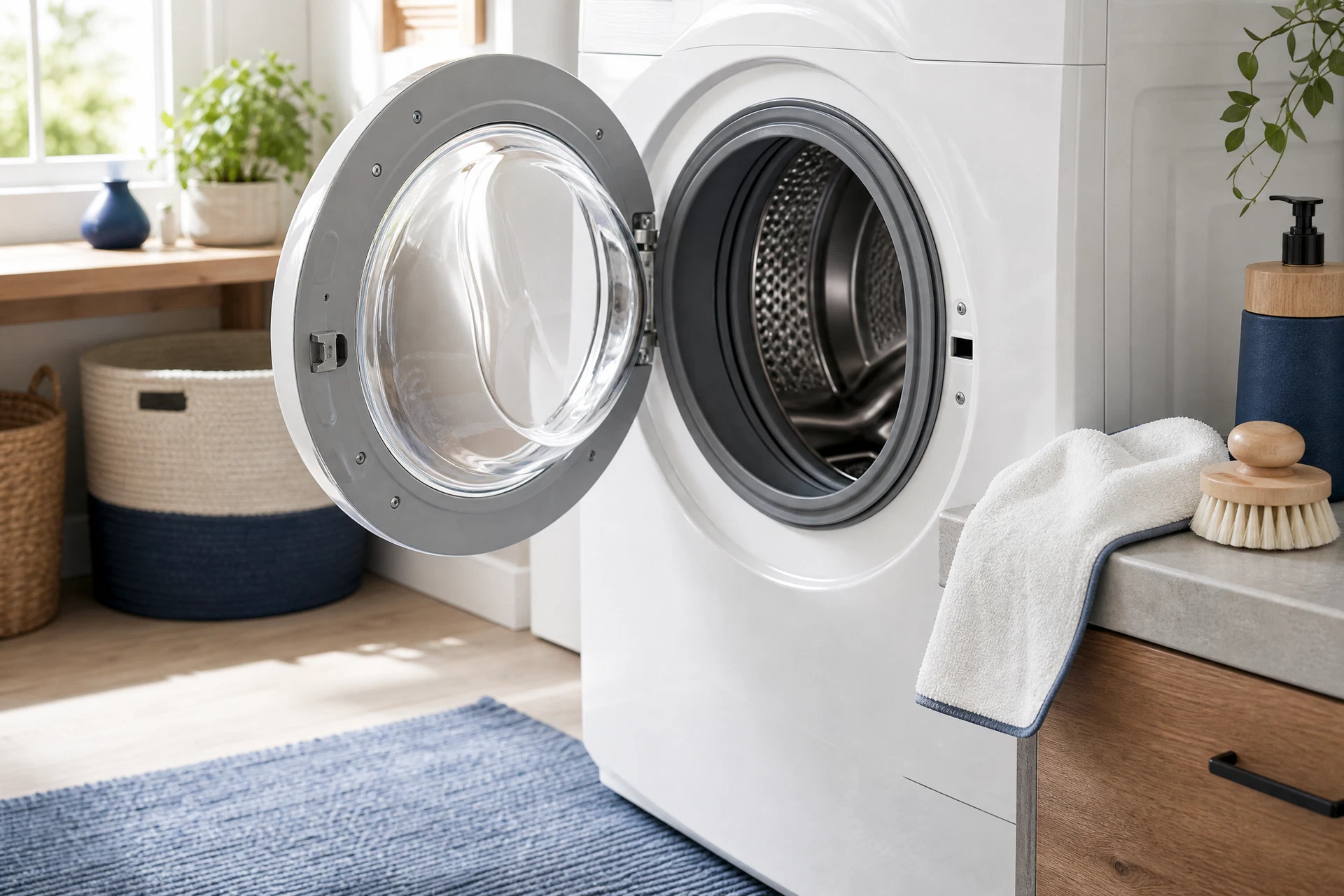
With the washer off and empty, pull back the rubber gasket folds gently, remove visible debris, wipe the seal with a cloth and a manufacturer-approved cleaner, dry it fully, and leave the door ajar when the machine is not in use if your manual allows it.
Front-load washer gaskets hold water after a cycle. That damp space can collect lint, detergent residue, and odor-causing buildup, especially when the door is closed immediately after laundry.
Step-by-step
Check the care manual and empty the washer
Look up the manufacturer’s cleaning guidance before using a product. Make sure the drum is empty and the appliance is switched off.
Inspect the gasket folds slowly
Gently pull back each fold and look for lint, hair, coins, small clothing items, or standing water. Remove loose items without stretching the rubber.
Wipe residue with a suitable cloth and cleaner
Use a soft cloth dampened with a cleaner approved for your washer or a mild solution recommended in the manual. Clean the folds, the door glass edge, and the lower drain area.
Rinse the cloth and wipe away cleaner
Use a second clean damp cloth if needed so cleaning product is not left on the rubber. Do not soak the seal or pour cleaner into the folds.
Dry the gasket and door opening
Use a dry towel to remove moisture from the folds and door glass. Drying is as important as cleaning because it helps prevent repeat odor.
Run the recommended maintenance cycle
If your model has a Tub Clean or similar cycle, run it as directed. Use only the amount and type of cleaner specified by the manufacturer.
Helpful tips
- Use the washer’s detergent amount guidance; excess detergent can leave more residue.
- Remove wet laundry promptly after a cycle.
- Make gasket inspection part of a monthly laundry reset instead of waiting for a strong odor.
Common mistakes
- Using a sharp tool to pull material from the seal.
- Leaving cleaner pooled inside the folds.
- Keeping the door tightly closed between every cycle when the manual recommends airflow.
Before you continue
- Stop if the rubber is torn, the machine leaks, or there is a strong persistent moldy odor after cleaning.
- Never mix cleaners or use a product that the appliance maker warns against.
When the first attempt does not work
The washer still smells after I cleaned the gasket. What else should I do?
Check the detergent drawer, drain filter if your manual allows access, and run the recommended maintenance cycle. Persistent odor with poor drainage or leaks may need service.
There are black marks on the gasket that do not wipe off. Are they removable?
Some staining can remain even after the surface is clean. If the rubber is damaged, slippery, or the marks spread quickly, stop and seek manufacturer or service guidance.
Continue with a related guide
Questions answered
How often should I clean a front-load washer gasket?
Inspect it after laundry sessions and do a more thorough clean about monthly, or sooner if residue or odor appears.
Can I leave the washer door open?
Many front-load washer manuals recommend leaving the door and detergent drawer slightly ajar between cycles for airflow. Follow your model’s guidance and household safety needs.
Why is water sitting in the gasket fold?
The seal shape naturally catches some moisture. Drying the fold and improving airflow helps prevent that moisture from becoming a lingering odor source.
This guide is general informational content. It does not replace professional advice for legal, medical, financial, safety, or other consequential decisions.