Quick answer
Fruit flies disappear when you remove moist, fermenting material that supports their life cycle. Discard overripe produce, clean drains and recycling, store produce appropriately, and use a simple trap only as a way to reduce the adults while source control works.
A few fruit flies can multiply quickly because adults keep finding new moisture and food residue. The reliable fix is not a single trap; it is a short, thorough reset of produce, drains, bins, and overlooked sticky spots.
Step-by-step
Confirm they are likely fruit flies
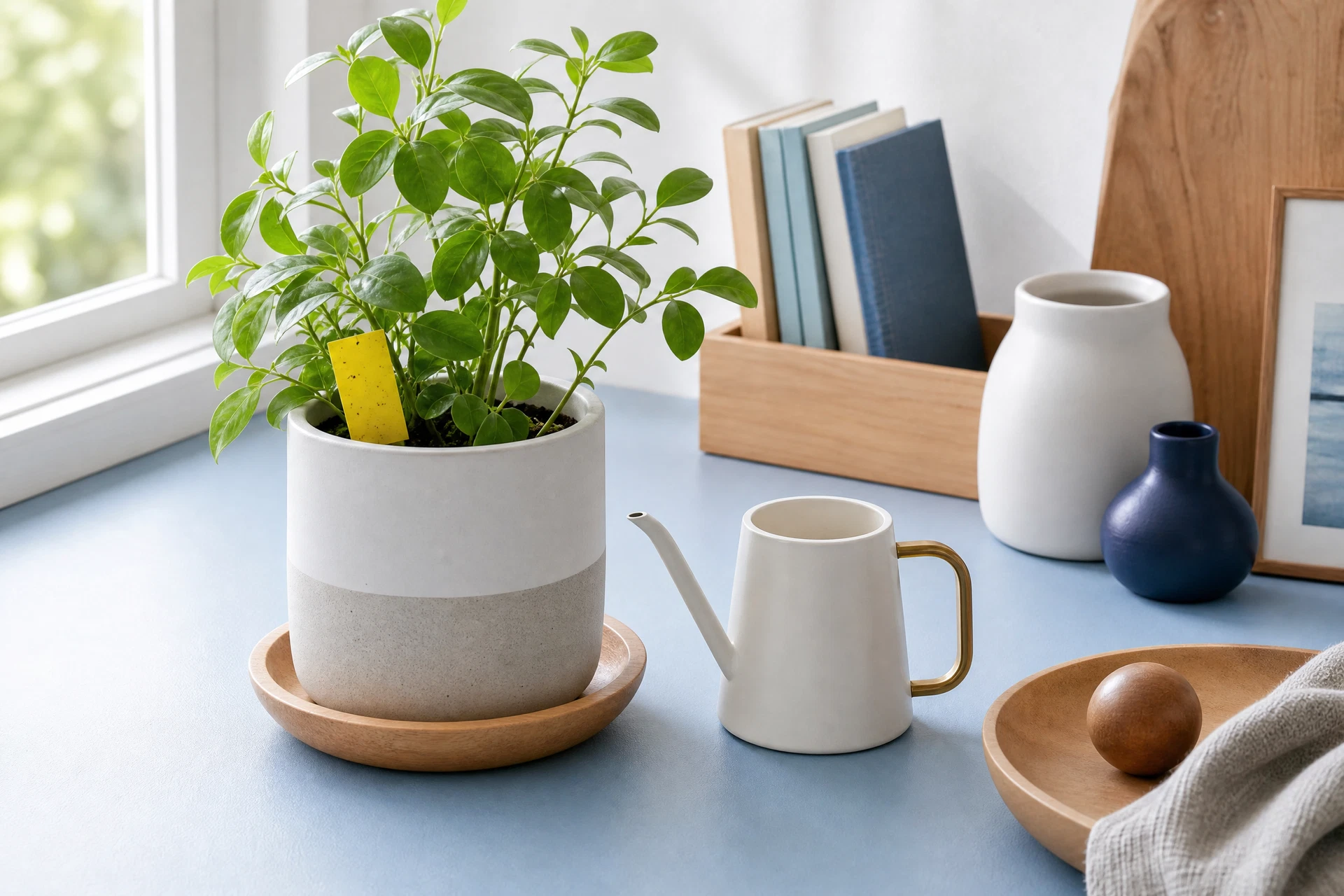
Fruit flies usually hover around ripe produce, recycling, or sink areas. If insects are concentrated around houseplant soil or a drain, the source and treatment can be different.
Remove ripe and damaged produce
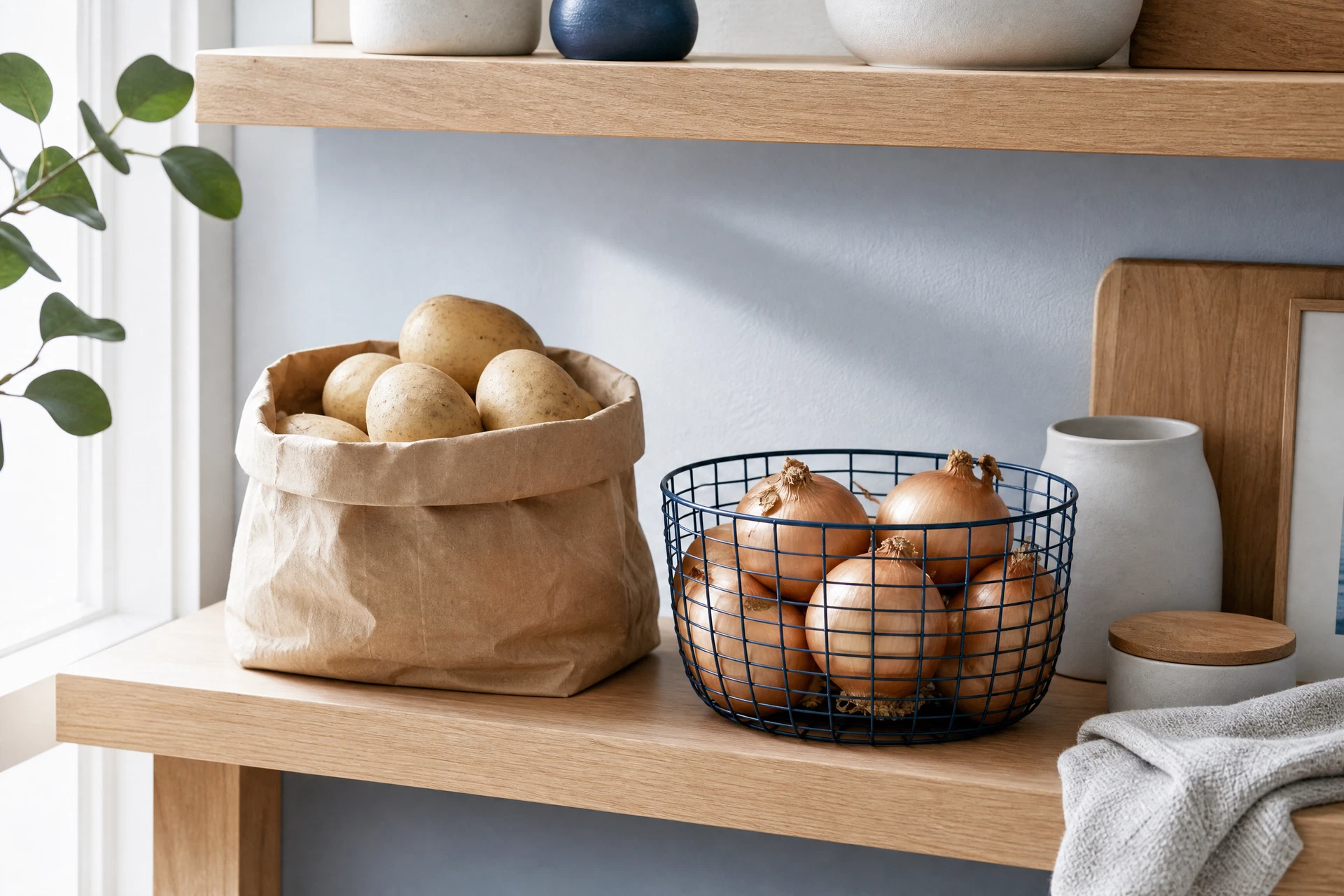
Throw away spoiled fruit and vegetables, then refrigerate ripe produce that can be chilled. Wipe the bowl, counter, and any fruit juice beneath containers.
Reset recycling, compost, and trash
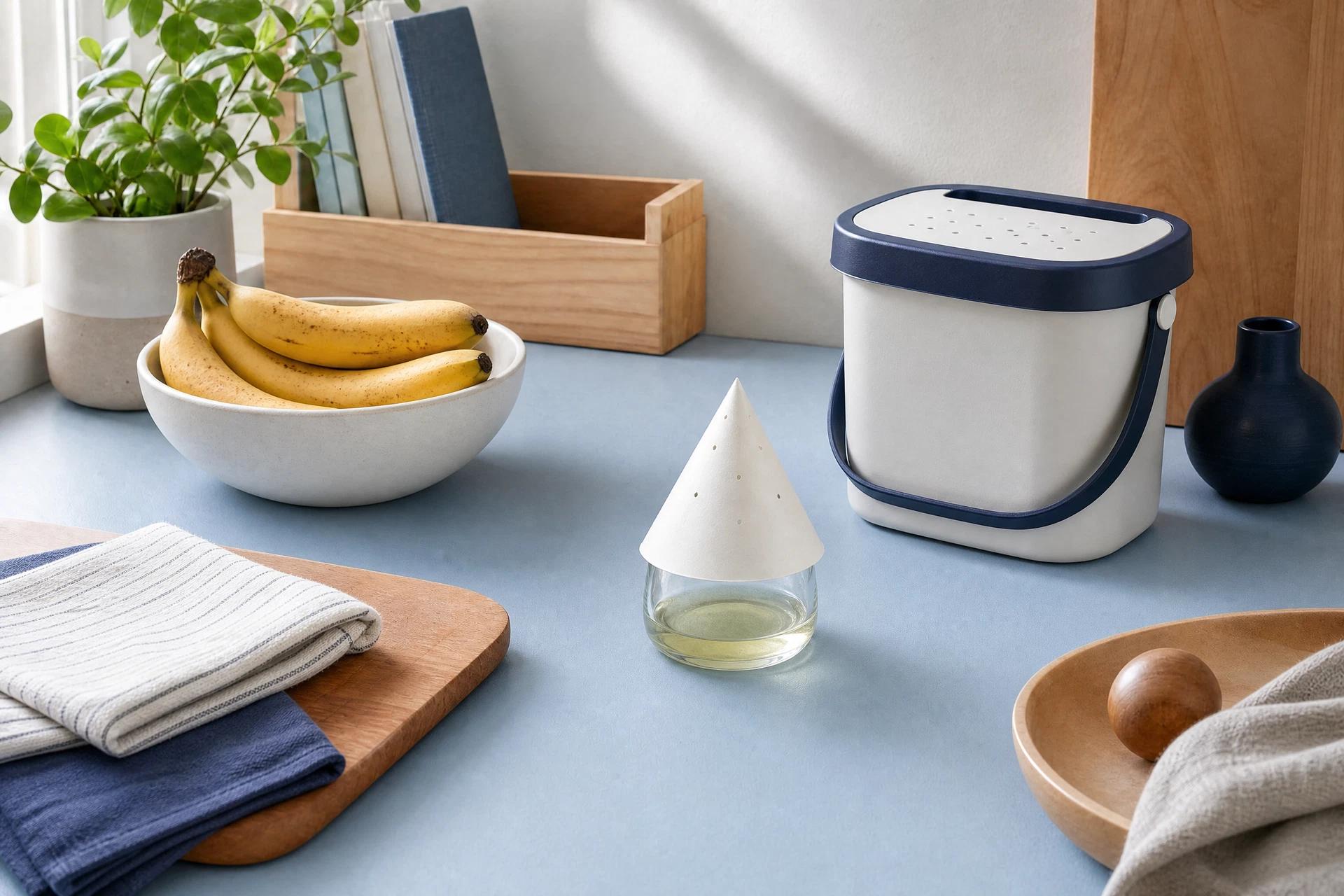
Rinse bottles and cans, empty kitchen waste, and wash the bin lid and rim. Keep compost covered and empty it more frequently during a fly problem.
Clean the sink and drain area
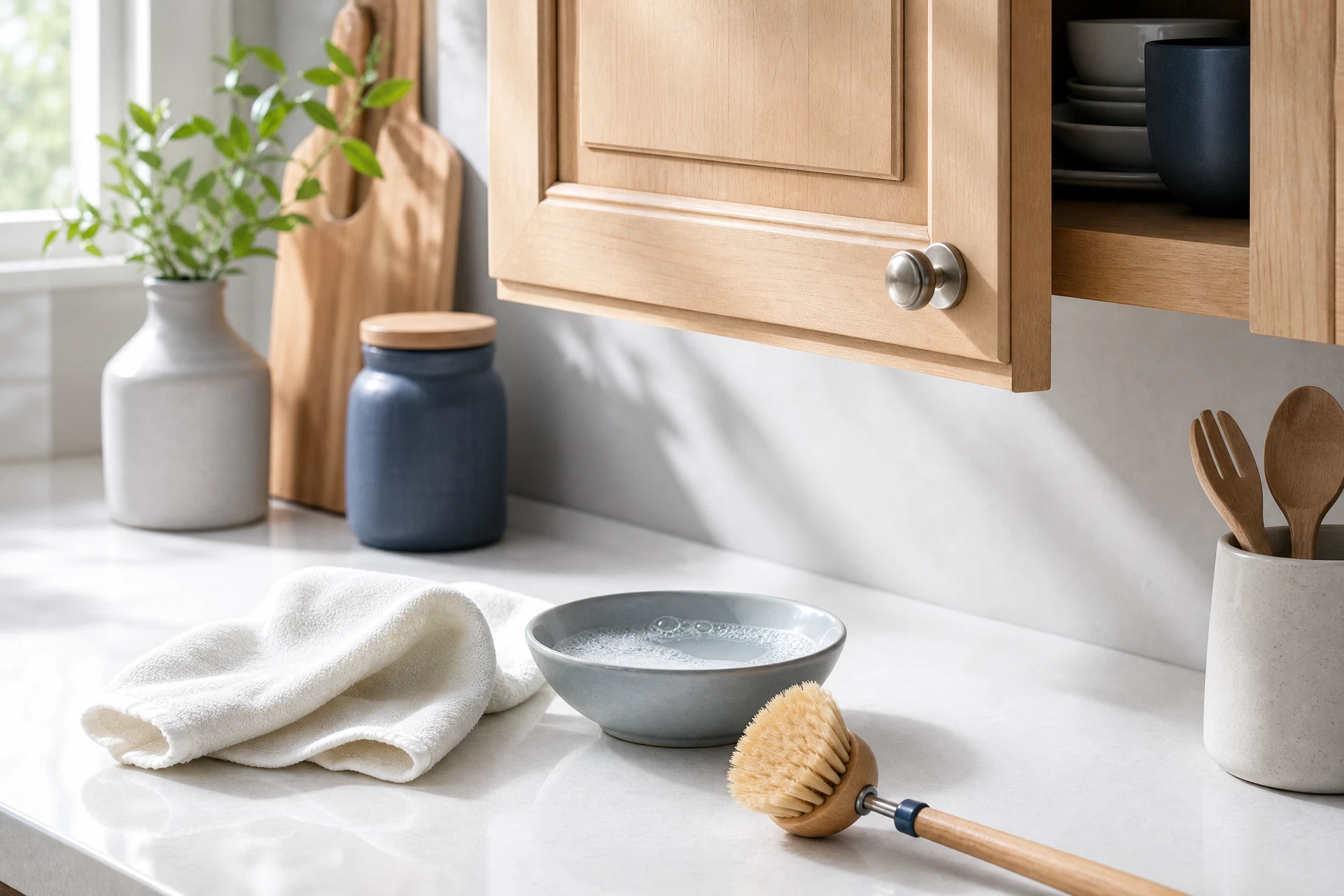
Scrub the sink, drain cover, and nearby counter edges with ordinary dish soap and water. Follow safe, labeled drain-cleaning guidance if buildup is suspected; never mix household cleaners.
Use a small trap for remaining adults
Place a small amount of apple-cider vinegar or ripe-fruit bait in a narrow container with a drop of dish soap. Keep it away from food preparation and replace it daily while you remove sources.
Watch for new activity for one week
Continue checking produce, recycling, and drains. If numbers do not decline, reassess whether the insects may be drain flies or fungus gnats instead.
Helpful tips
- Freeze food scraps until collection day if your compost setup attracts flies.
- Check under appliances and small countertop bins where spilled juice can hide.
- Buy smaller amounts of fast-ripening fruit during a recurring infestation.
Common mistakes
- Leaving the trap out but ignoring the recycling or fruit bowl.
- Mixing cleaning chemicals in a drain.
- Assuming every tiny flying insect is a fruit fly.
Before you continue
- Keep traps and cleaners away from children, pets, and food-preparation surfaces.
- If insects persist despite source control or you suspect a larger pest problem, seek local pest-management guidance.
When the first attempt does not work
The trap catches flies, but new ones keep appearing. What is missing?
A trap catches adults but does not remove breeding material. Recheck produce, compost, recycling, mop heads, drain edges, and hidden spills until you find the moisture source.
The flies are hovering over a houseplant. Are they fruit flies?
They may be fungus gnats, which breed in moist soil. Inspect the plant area and follow a houseplant-specific plan rather than treating only the kitchen.
Continue with a related guide
Questions answered
How long does it take to get rid of fruit flies?
If the breeding source is removed, activity often drops over several days. Continue cleaning and monitoring for about a week to interrupt repeat hatching.
Do fruit-fly traps work?
They can reduce visible adults, but they work best alongside source control. A trap alone does not remove eggs or damp food residue.
Should I refrigerate all fruit?
Not necessarily. Refrigerate ripe items that tolerate chilling, and keep counter-stored produce clean, dry, and checked daily.
This guide is general informational content. It does not replace professional advice for legal, medical, financial, safety, or other consequential decisions.