Quick answer
Let the upper soil dry as appropriate for the plant, remove decaying material, improve drainage, use sticky traps to monitor adults, and repeat plant-safe controls long enough to interrupt the larvae-to-adult cycle. Avoid overwatering, which is the common driver.
Fungus gnats are small flies that thrive in consistently damp organic potting mix. Adults are annoying, but the long-term solution is changing the damp conditions that support larvae while keeping the plant’s own water needs in mind.
Step-by-step
Confirm the pest and inspect the soil
Fungus gnats tend to rise from potting mix when the pot is disturbed. Check for consistently wet soil, decaying leaves, algae, and pots without good drainage.
Adjust watering to the plant’s needs
Allow the upper layer of soil to dry when the plant can tolerate it, then water thoroughly and let excess drain. Do not simply stop watering if the plant needs steady moisture.
Remove decaying plant matter
Clear fallen leaves, old flowers, and any moldy material from the pot surface. This reduces food sources that support gnats and other small pests.
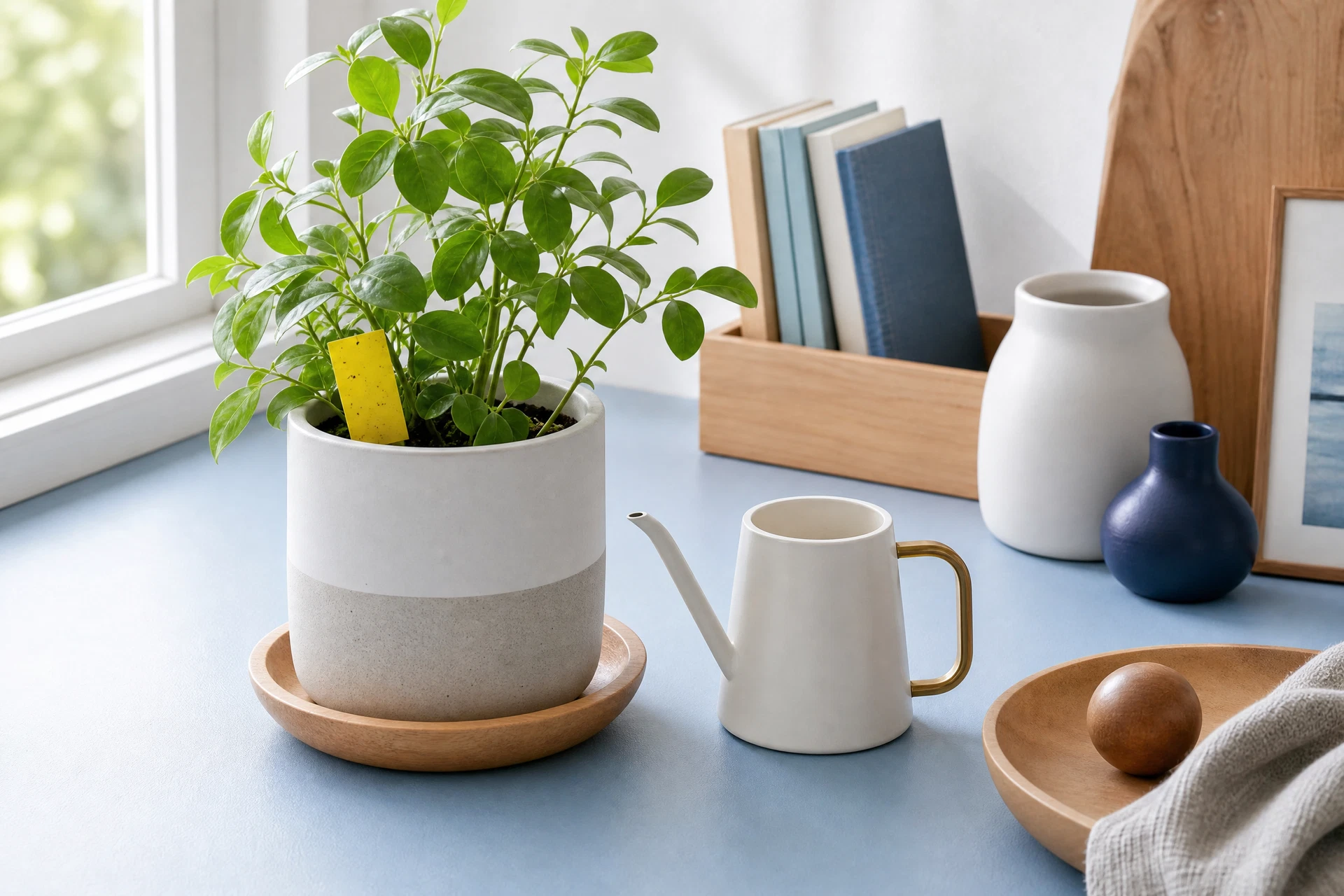
Use sticky traps as a monitor
Place plant-safe yellow sticky traps near the soil surface to catch adults and track whether numbers are falling. They help monitor progress but do not solve a wet-soil problem alone.
Improve drainage and airflow
Make sure the pot has drainage holes, the saucer is emptied after watering, and the mix is not compacted. Repot only if the soil or pot setup is clearly unsuitable.
Repeat the routine through the life cycle
Continue soil checks and traps for several weeks. New adults can emerge after the first cleanup, so consistent conditions matter more than one dramatic treatment.
Helpful tips
- Water from a small measured container so you can see how much each plant receives.
- Quarantine a heavily affected new plant from a collection while you assess it.
- Record trap counts weekly; a downward trend is more useful than judging one day.
Common mistakes
- Treating only adult flies while leaving soil constantly wet.
- Applying a pesticide not labeled for indoor houseplants.
- Letting pots sit in a saucer full of water.
Before you continue
- Keep sticky traps and any treatment products away from pets and children.
- If a plant is declining quickly, identify the plant and its care requirements before reducing water aggressively.
When the first attempt does not work
Gnats are still present after a week. Did the plan fail?
Not necessarily. Eggs and larvae already in soil can continue the cycle. Maintain the moisture changes and monitoring for several weeks rather than switching methods daily.
My plant needs moist soil. How can I avoid stressing it?
Follow its specific care needs and focus on drainage, removing decaying matter, and avoiding waterlogged conditions. A plant that needs moisture still benefits from air around its roots.
Continue with a related guide
Questions answered
Are fungus gnats harmful to houseplants?
A light adult presence is mainly a nuisance, but heavy infestations and persistently wet soil can stress young or already weakened plants. Address the soil conditions early.
Do sticky traps get rid of fungus gnats?
They reduce and monitor adults, but soil moisture and larvae must also be addressed for a lasting result.
Can fungus gnats spread to other plants?
Adults can move between nearby pots, especially where multiple plants have wet soil. Inspect the whole collection and adjust watering where needed.
This guide is general informational content. It does not replace professional advice for legal, medical, financial, safety, or other consequential decisions.