A rainy-day car kit is most useful when it stays compact and contains items you will actually replace after use. Focus on simple cleanup and comfort rather than filling the vehicle with seldom-used gear.
Step-by-step
Choose one contained storage location
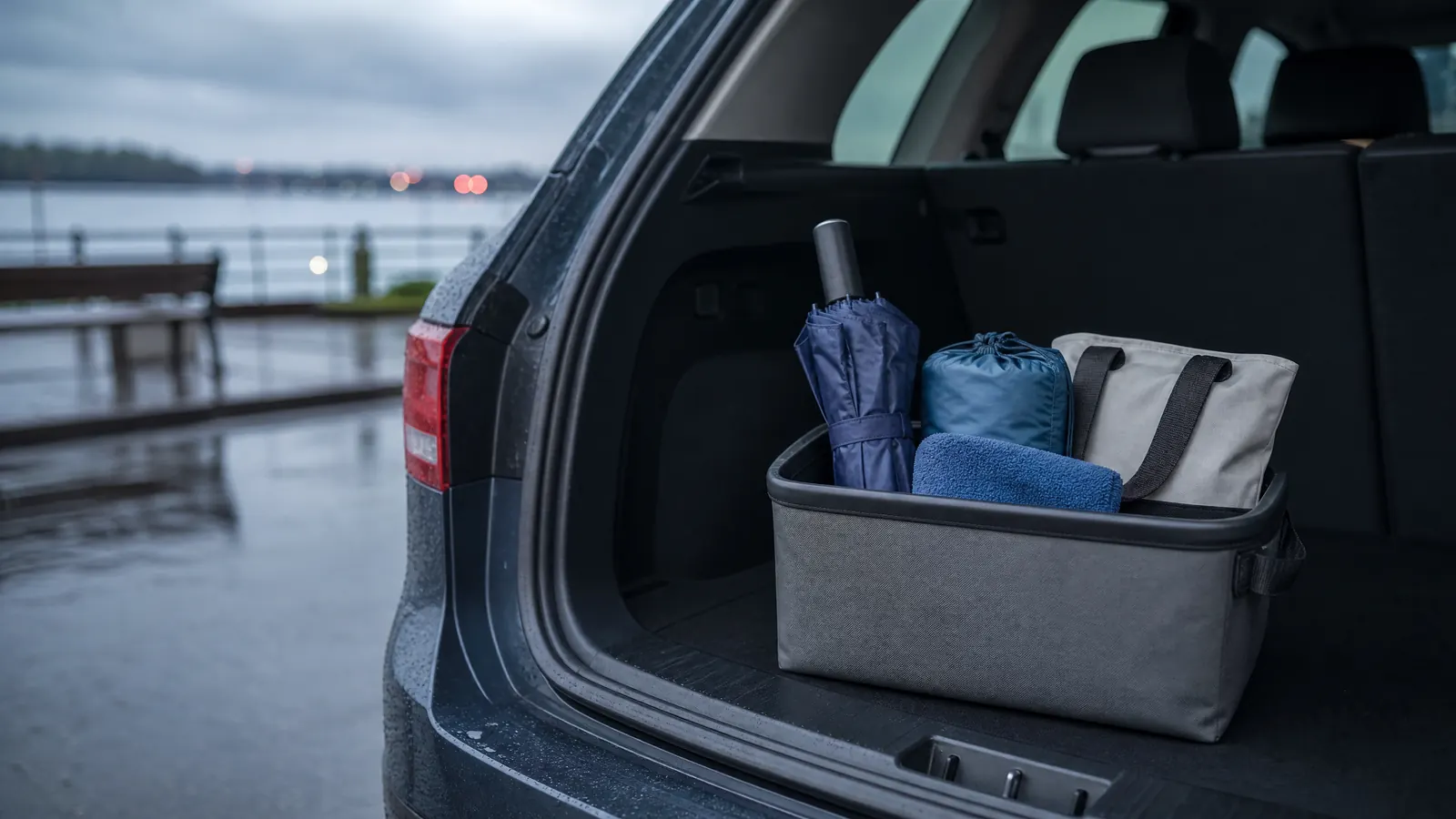
Use a small waterproof tote or pouch in a stable area of the vehicle. Keep it accessible without blocking safety equipment or cargo space.
Add cleanup basics
Include a microfiber cloth, disposable bag, and a small pack of wipes appropriate for surfaces. Replace used items promptly.
Add personal comfort items
A compact umbrella, reusable poncho, and spare pair of socks may be useful depending on your climate and routines.
Review seasonal needs
Check the kit when weather changes and remove items that are no longer useful. Keep any required emergency or safety equipment separate and maintained according to vehicle guidance.
Helpful tips
- Store a small checklist inside the kit so restocking is easy.
- Use items you already own before buying specialty organizers.
- Keep wet umbrellas in a removable bag so moisture does not spread.
Common mistakes
- Keeping loose items that roll around while driving.
- Blocking access to a spare tire, emergency release, or required vehicle equipment.
- Assuming a comfort kit replaces proper vehicle maintenance.
Before you continue
- Follow your vehicle manual and local guidance for any required safety equipment. This general organization guide is not a substitute for road-safety training, maintenance, or emergency advice.
Questions answered
Where should I keep a car kit?
A secure trunk compartment or stable cargo area is often practical, as long as it does not block equipment you may need to reach quickly.
How often should I check the kit?
Review it seasonally and after using any item, especially consumables and items affected by temperature.
This guide is general informational content. It does not replace professional advice for legal, medical, financial, safety, or other consequential decisions.