Indoor herbs are easier to maintain when their light, pot size, and watering rhythm match the conditions in your home. Treat each plant as a small growing system rather than a decorative object.
Step-by-step
Match herbs to the available light
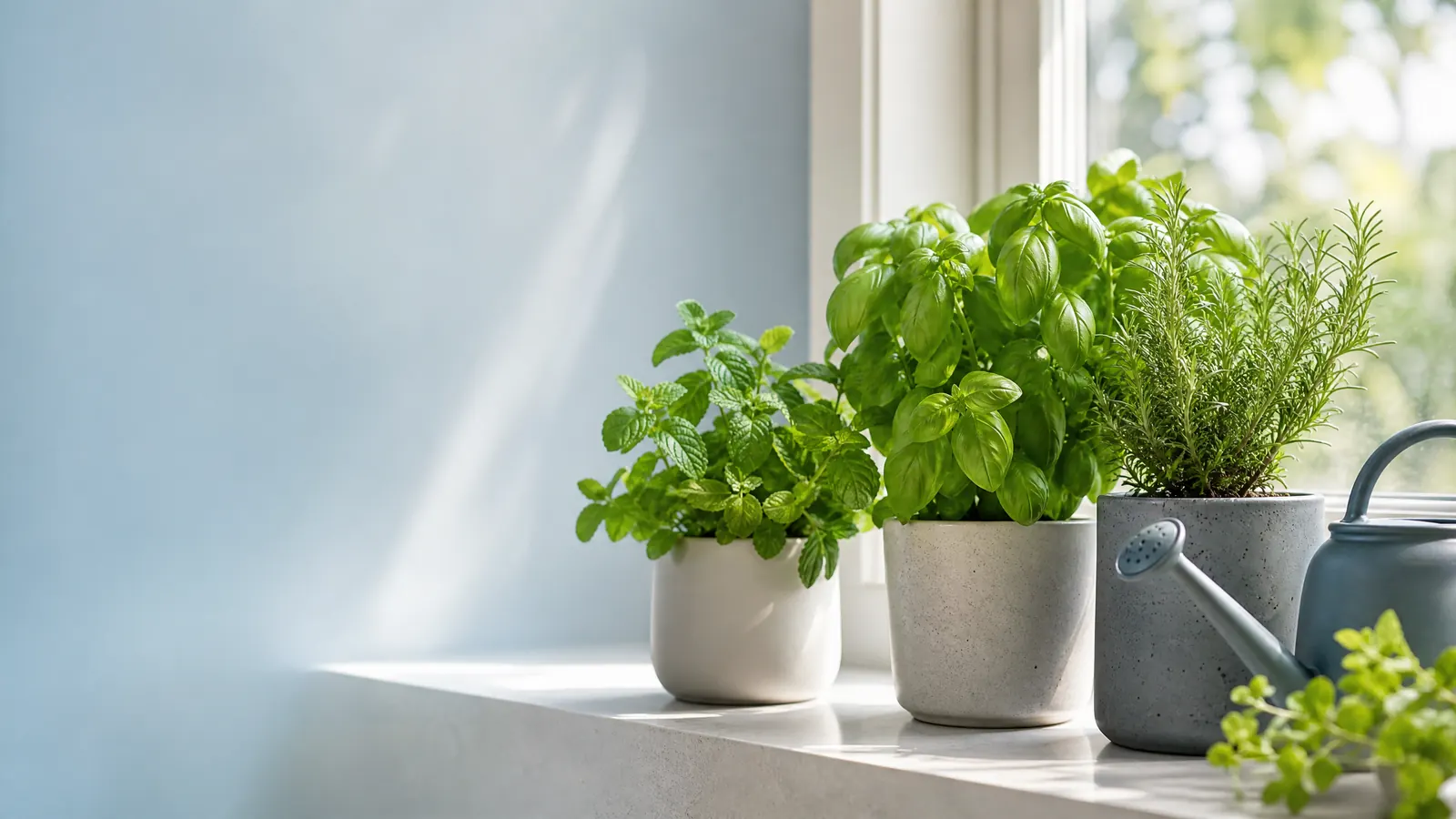
Choose a bright location and observe it for several days. Many culinary herbs prefer strong light, while low-light rooms may be better for a smaller selection or supplemental lighting.
Use containers with drainage
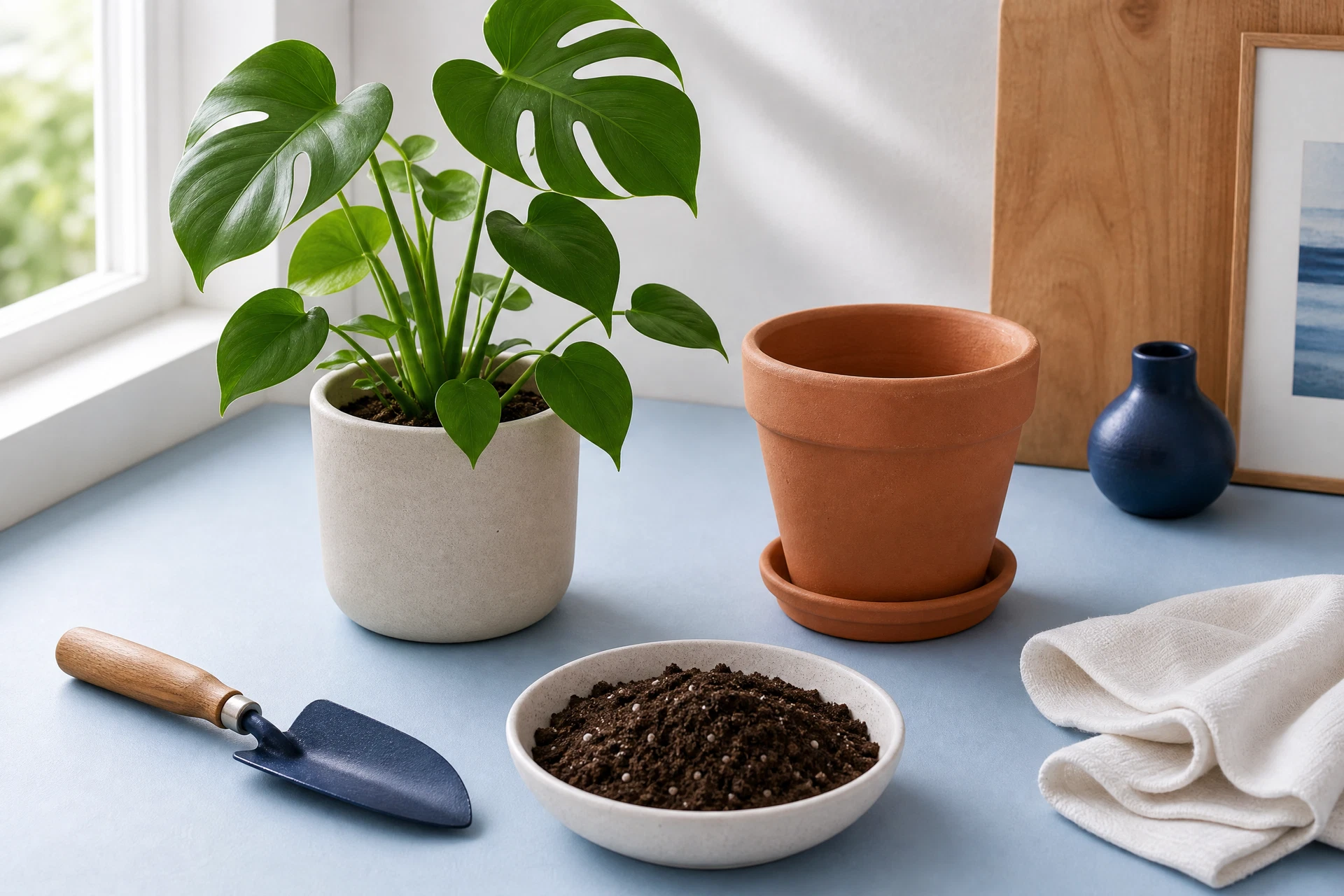
Select pots with drainage holes and a tray. Water should be able to leave the root zone rather than collecting around the roots.
Check moisture before watering
Feel the top layer of soil and water when it is appropriately dry for that herb. A calendar alone cannot account for changes in temperature, light, and humidity.
Harvest gently and regularly
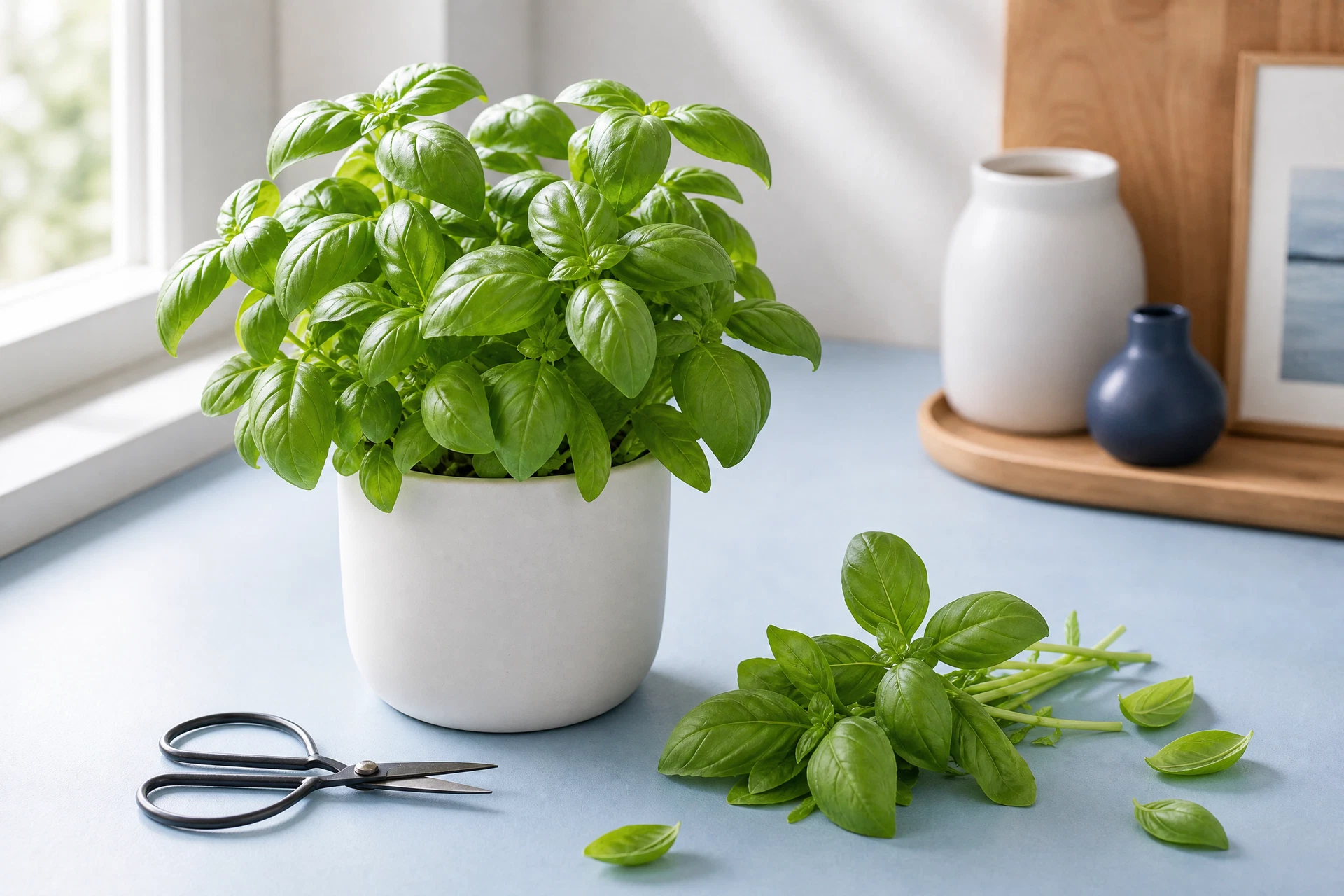
Trim a few leaves or soft stems at a time, above a growing point. Regular light harvesting can help some herbs branch rather than becoming leggy.
Watch for changes
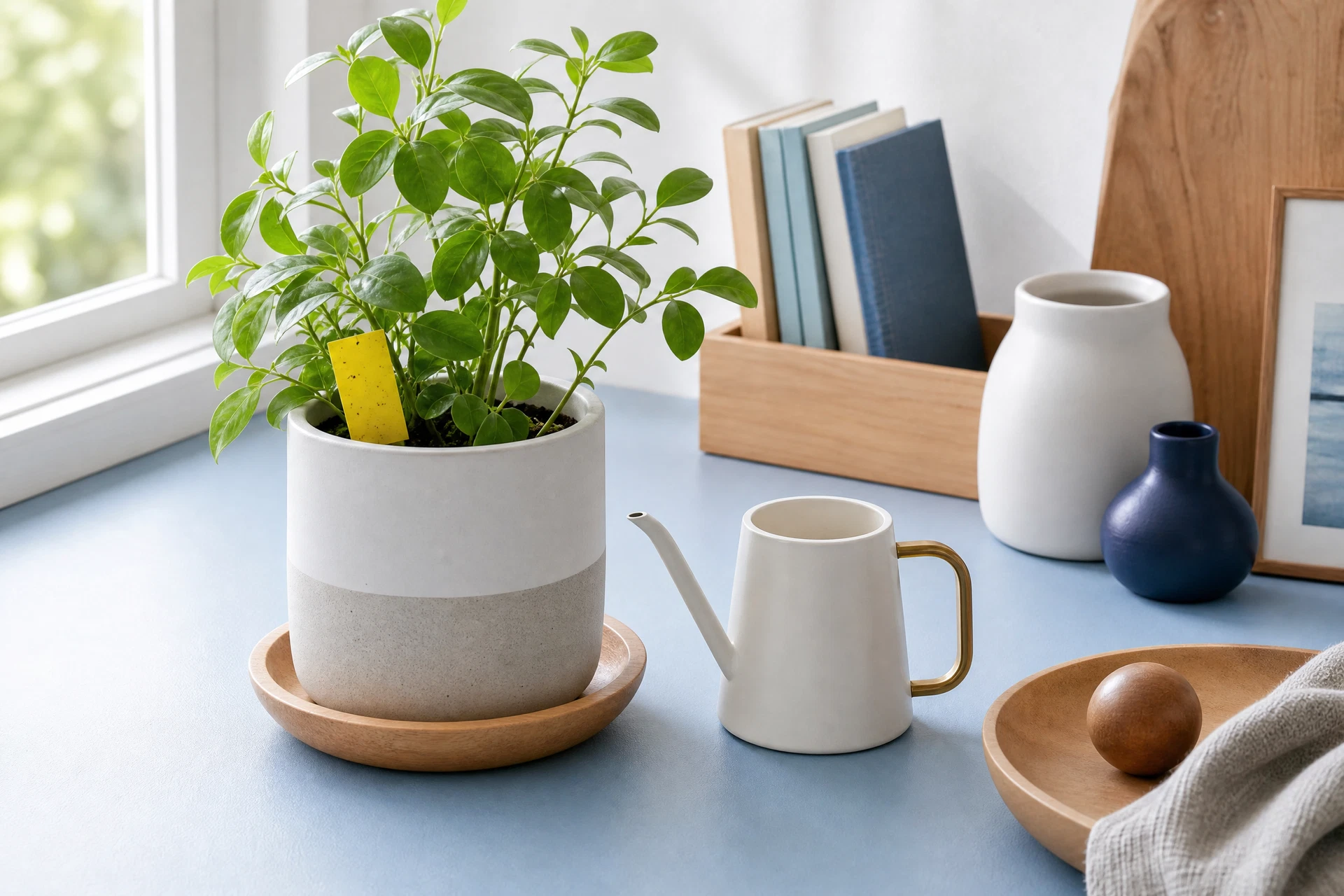
Yellowing, drooping, or pests can have several causes. Review light, watering, drainage, and airflow before making a major change.
Helpful tips
- Turn pots occasionally so growth is more even.
- Use a saucer that protects the windowsill from water.
- Keep a simple note of watering changes when seasons shift.
Common mistakes
- Watering on a rigid schedule without checking soil.
- Putting multiple herbs with different needs in one small pot.
- Harvesting more than the plant can comfortably regrow.
Before you continue
- Keep fertilizer and plant treatments away from children and pets, and follow product instructions carefully. For pet safety questions, check with a qualified veterinary professional.
Questions answered
Why are my indoor herbs getting leggy?
Leggy growth often points to insufficient light or a lack of regular trimming. Review the plant’s light exposure before making multiple changes at once.
Can I grow herbs in any container?
A container can work if it provides adequate root space and drainage. Avoid containers that trap water around roots unless you add an appropriate inner pot or drainage solution.
This guide is general informational content. It does not replace professional advice for legal, medical, financial, safety, or other consequential decisions.