Quick answer
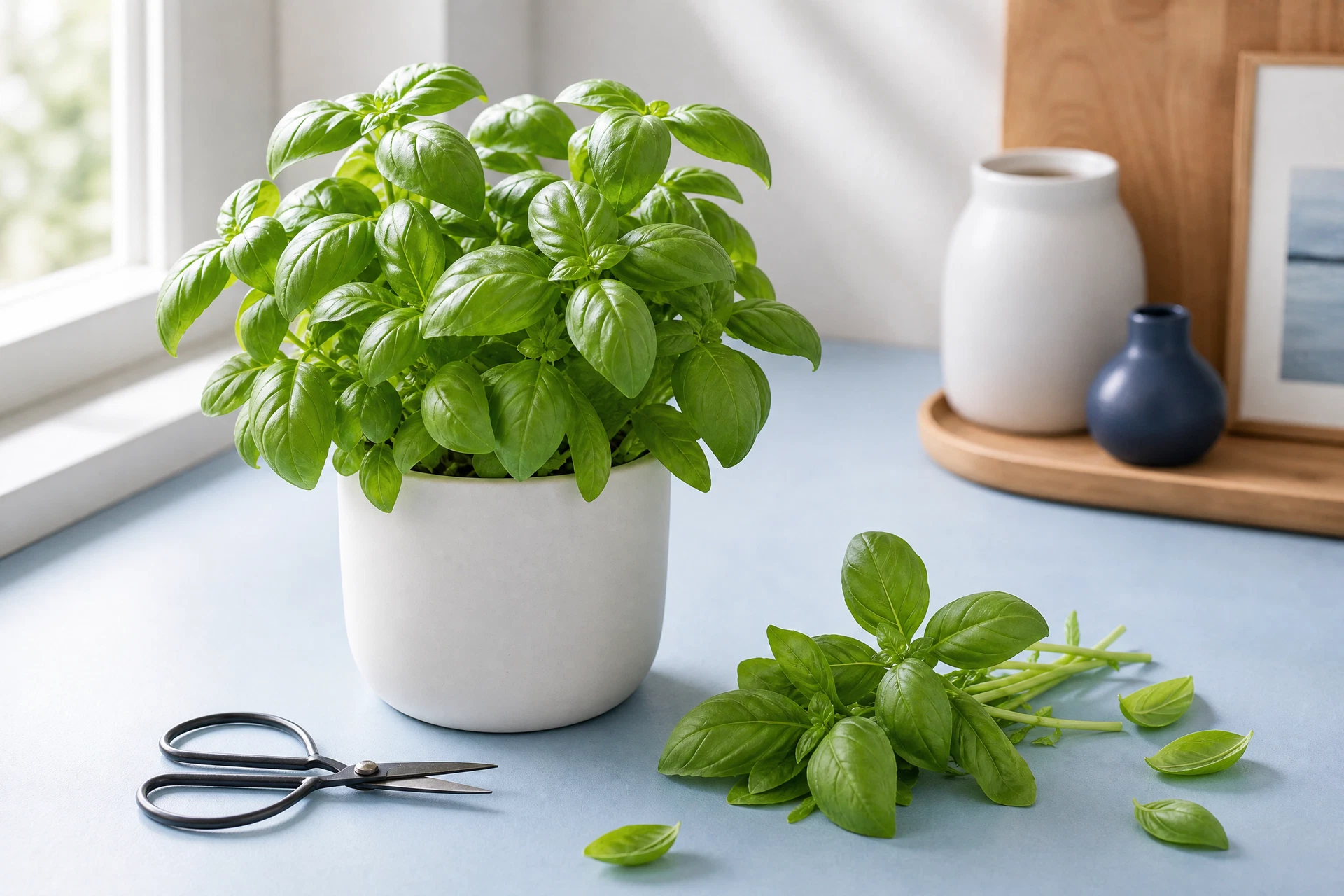
When basil has several sets of true leaves, cut or pinch a stem just above a pair of leaves. New side shoots grow from that junction. Repeat lightly as the plant grows, remove flower buds promptly, and avoid taking too much from a small plant at once.
Basil becomes bushier when a growing tip is removed above a leaf pair. That simple cut redirects growth into side branches, giving you more harvest points and reducing the tall, leggy shape that often appears when basil is left untouched.
Step-by-step
Wait for a plant with enough leaf sets
Begin only once the basil has established several healthy sets of leaves. A tiny newly transplanted plant needs time to root and grow before regular harvesting.
Find a healthy leaf pair below the growing tip
Look for two leaves emerging opposite each other on a stem. The small buds at that junction are the points that can become new branches.
Cut just above the leaf pair
Use clean scissors or pinch with clean fingers, leaving the leaf pair and tiny buds intact. Make a small, clean cut rather than tearing the stem.
Harvest a little from multiple stems
Spread light cuts across the plant instead of taking one long branch. This keeps the plant balanced and leaves enough foliage to support continued growth.
Remove flower buds promptly
When flower spikes begin to form, pinch them off above a leaf pair. Flowering changes flavor and redirects the plant’s energy away from leafy branching.
Support recovery with normal care
Give the plant appropriate light, watering, and airflow. Do not over-fertilize or water more heavily just because you pruned it.
Helpful tips
- Use your first small prunings in a meal so the task feels like harvesting, not waste.
- Turn the pot periodically if growth leans toward one light source.
- Prune regularly in small amounts rather than waiting until stems are long and woody.
Common mistakes
- Cutting below a useful leaf pair.
- Removing most of the plant’s leaves at once.
- Letting flower spikes mature when your goal is leafy basil.
Before you continue
- Use clean tools to avoid transferring plant disease.
- Do not prune a plant that is severely wilted, newly transplanted, or struggling with pests until the underlying stress is addressed.
When the first attempt does not work
My basil is tall but not branching. What should I check?
Look for whether cuts were made above leaf pairs and whether the plant has enough light. If stems are very leggy, begin with small correct cuts and improve light gradually.
The leaves are yellow after pruning. Is pruning the cause?
Yellowing is more often linked to watering, light, root conditions, or pests. Review care conditions rather than repeatedly pruning a stressed plant.
Continue with a related guide
Questions answered
How often should I prune basil?
Light, regular harvesting once the plant is established is usually better than infrequent heavy cutting. The exact timing depends on growth rate and light.
Can I prune basil flowers?
Yes. Removing flower buds early helps keep the plant focused on leafy growth, which is useful when you want more culinary basil.
Where exactly should I cut basil?
Cut just above a pair of healthy leaves so the buds at that node can grow into new branches.
This guide is general informational content. It does not replace professional advice for legal, medical, financial, safety, or other consequential decisions.