Quick answer
Choose a pot only slightly larger than the current one, use a potting mix suited to the plant, loosen roots gently, set the plant at its previous soil level, water lightly after repotting, and give it stable light while it adjusts.
Repotting is stressful mainly when a plant is moved into a pot that is too large, buried too deeply, or placed in soil that stays wet too long. Slow preparation and minimal root disturbance work better than aggressive cleanup.
Step-by-step
Confirm that repotting is actually needed
Look for roots circling tightly, water running straight through, a pot that dries unusually fast, or a plant that has outgrown its container. Avoid repotting only because you want a larger decorative pot.
Choose a pot with drainage and modest extra room
Select a container with drainage holes that is only a little wider than the root ball. A dramatically larger pot can hold excess wet soil around the roots.
Prepare the right potting mix and workspace
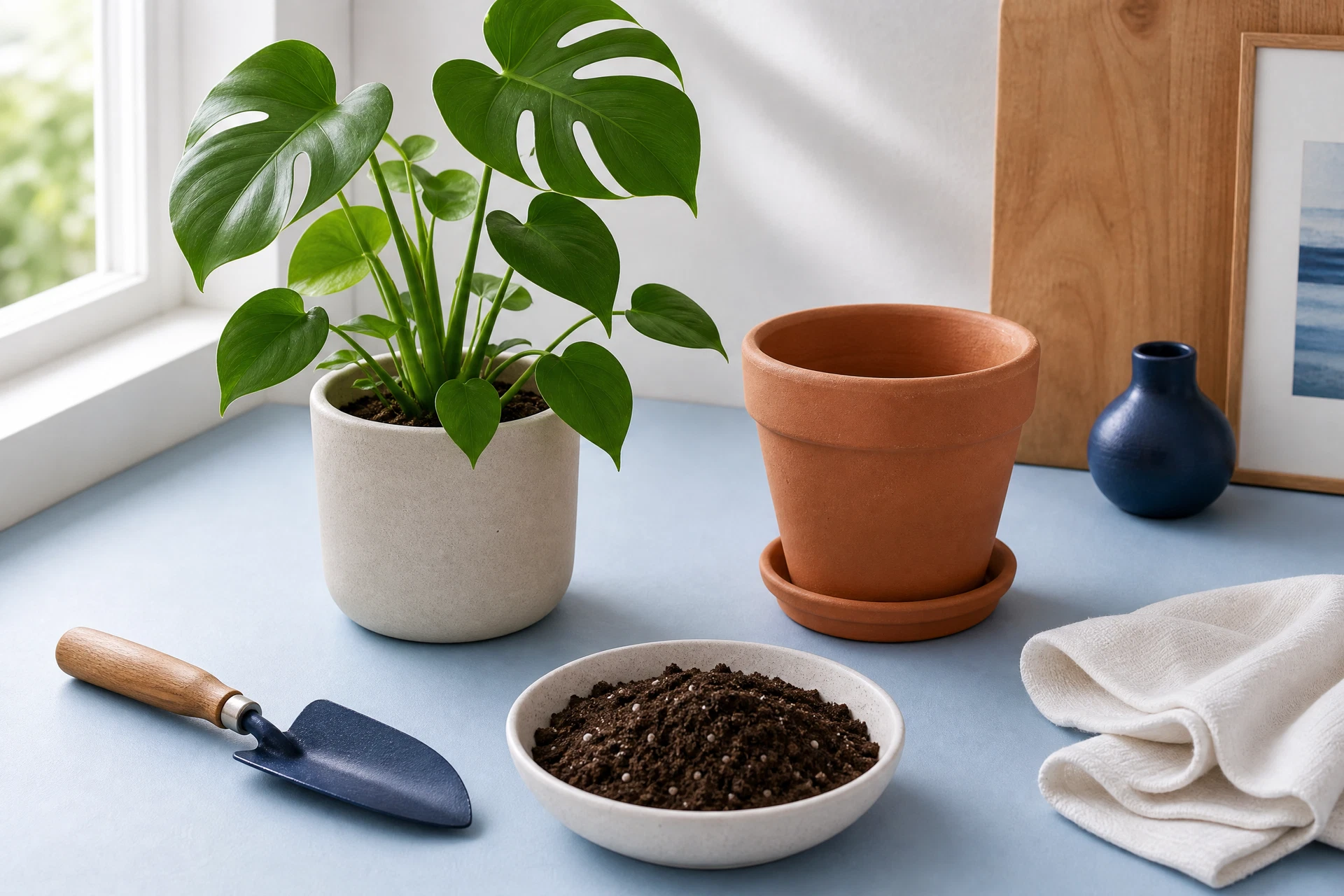
Use a clean surface and mix appropriate for the plant type. Have the new pot, soil, and water ready so roots are not exposed longer than needed.
Ease the plant out and inspect roots
Support the base, tip the current pot, and loosen the root ball gently. Remove only clearly dead or mushy roots with clean tools; do not strip healthy roots simply to make them look tidy.
Set the plant at the correct height
Add a small base layer of mix, place the plant so its existing soil line remains near the new soil surface, then fill around it lightly without compacting hard.
Water lightly and stabilize aftercare
Water enough to settle the mix, allow excess water to drain, and return the plant to stable indirect conditions. Avoid fertilizing immediately unless the plant’s care guidance says otherwise.
Helpful tips
- Repot during an active growth period when the plant can recover more easily.
- Use a clean pot rather than reusing one with old soil or pests.
- Photograph the plant before repotting so you can compare leaf position and health over the next weeks.
Common mistakes
- Moving a small plant into a dramatically larger pot.
- Removing healthy roots aggressively.
- Watering on a fixed schedule after repotting instead of checking soil moisture.
Before you continue
- Wear gloves when handling plants or mixes that may irritate skin.
- Do not repot a severely stressed, diseased, or pest-infested plant without first identifying the issue; a bigger pot may not solve it.
When the first attempt does not work
My plant drooped after repotting. Did I kill it?
A short adjustment period can be normal. Keep light and watering stable, avoid repeated moves, and watch for recovery rather than overcorrecting with fertilizer or excess water.
Water sits on top of the new soil. What should I do?
Check that the pot has drainage and the mix suits the plant. Do not keep adding water; allow the mix to drain and reassess the soil and pot setup.
Continue with a related guide
Questions answered
How much bigger should a new houseplant pot be?
Usually only modestly bigger than the root ball. The right amount varies by plant, but avoiding an oversized pot helps prevent persistently wet soil.
Should I water right after repotting?
A light initial watering often helps settle mix, but follow the needs of the specific plant and do not leave the pot sitting in drained water.
Can I reuse old potting soil?
Old soil may be depleted or harbor pests. Fresh, suitable potting mix is usually the safer choice when repotting a houseplant.
This guide is general informational content. It does not replace professional advice for legal, medical, financial, safety, or other consequential decisions.