Quick answer
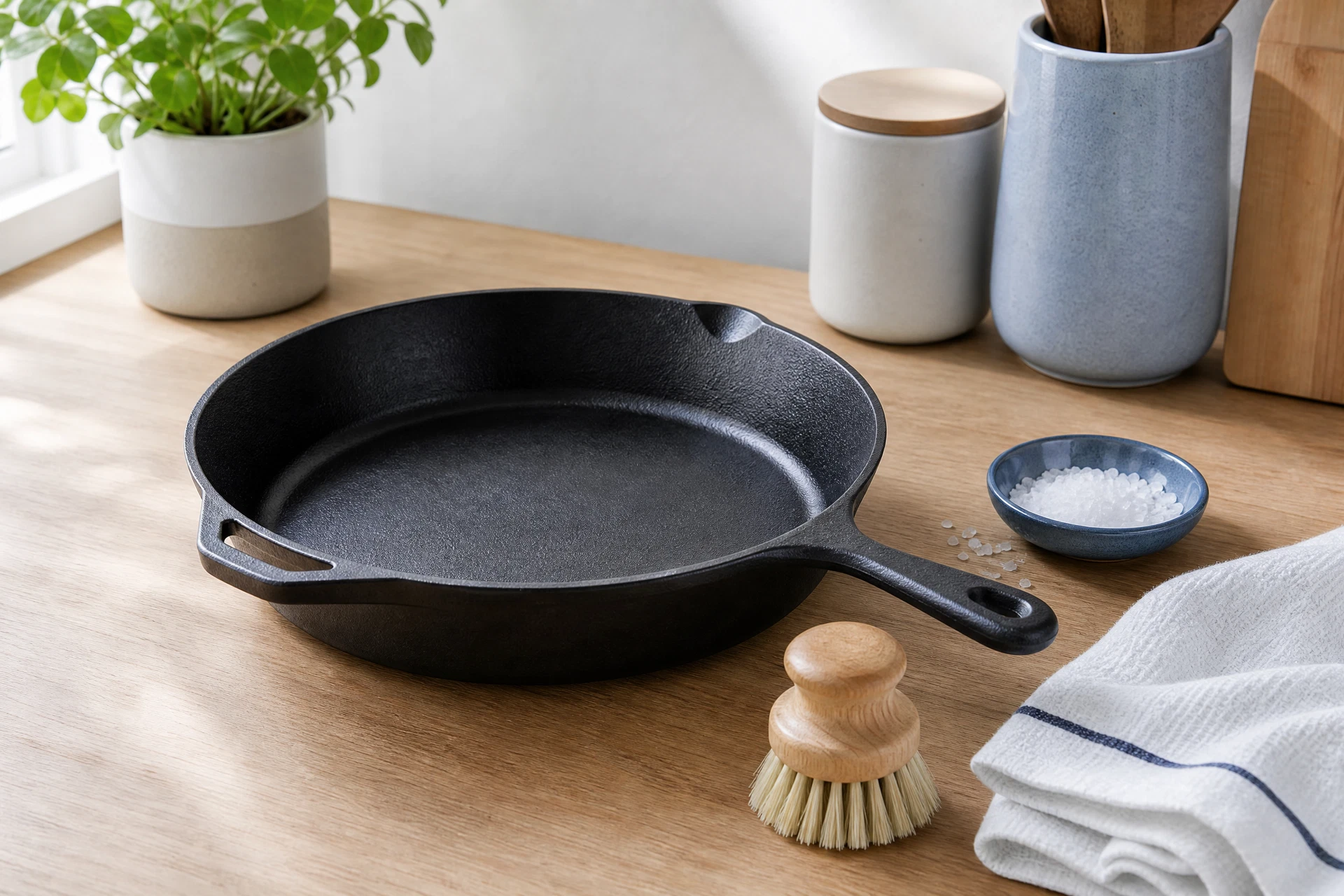
Let the skillet cool until safe to handle, rinse it with warm water, loosen stuck food with a pan scraper or brush, dry it completely over low heat, and apply a very thin coat of cooking oil if the surface looks dry.
Cast iron is durable, but its cooking surface benefits from a simple routine that removes food and moisture without leaving the pan wet. The goal is not to preserve every speck of residue; it is to keep the surface clean, dry, and usable.
Step-by-step
Let the skillet cool to a safe handling temperature
Do not plunge a very hot skillet into cold water. Wait until it is warm rather than scorching, then move it to the sink or cleaning area.
Rinse with warm water
Use warm running water to loosen ordinary food residue. A small amount of mild soap can be appropriate for many modern seasoned pans, but follow your pan maker’s care guidance.
Release stuck food gently
Use a pan scraper, soft brush, or non-abrasive sponge. For stubborn bits, simmer a small amount of water in the pan briefly, then scrape once the residue softens.
Rinse and inspect the cooking surface
Make sure no food remains in corners or around pour spouts. A clean pan should feel smooth enough for your next use, not slick with leftover oil or residue.
Dry the skillet completely
Towel dry, then place the pan over low heat for a few minutes until all moisture has evaporated. This is the step that best helps prevent rust.
Add a thin oil layer only if needed
When the pan is dry and warm, rub in a few drops of neutral cooking oil and wipe off the excess. The pan should look lightly conditioned, not greasy.
Helpful tips
- Use a dedicated pan scraper for quick cleanup after eggs, sauces, or seared food.
- Store the pan in a dry place with the lid off or slightly vented if moisture is a concern.
- Cook with enough fat for the recipe while the seasoning layer continues to develop.
Common mistakes
- Leaving the skillet to air dry in the sink.
- Applying a thick layer of oil that turns sticky in storage.
- Using a harsh abrasive routine for every small stuck-on bit.
Before you continue
- Handle the pan and its handle carefully; cast iron stays hot longer than thin cookware.
- If deep rust, flaking seasoning, or cracking appears, follow the manufacturer’s restoration guidance instead of continuing ordinary cleaning.
When the first attempt does not work
Food keeps sticking after I clean the skillet. What should I change?
Preheat the pan, use appropriate cooking fat, and allow the surface to build seasoning through normal use. A sticky surface can also come from excess oil baked onto the pan.
I see a small rust spot. Is the pan ruined?
Small surface rust can often be addressed with a targeted cleaning and reseasoning method appropriate to the pan. Do not leave the pan wet or store it with moisture trapped inside.
Continue with a related guide
Questions answered
Can I use soap on cast iron?
Many modern cast-iron makers allow a small amount of mild soap when needed. Check the pan maker’s instructions and avoid leaving the pan wet afterward.
Should I oil cast iron after every use?
A very thin layer can help if the pan looks dry, but heavy oiling is not necessary after every meal. Complete drying matters most.
Can cast iron go in the dishwasher?
No. Dishwasher cycles can leave the pan wet and strip or damage the seasoned surface.
This guide is general informational content. It does not replace professional advice for legal, medical, financial, safety, or other consequential decisions.