Quick answer
Start with a mild cleaner or a paste made for the surface, test an inconspicuous area, let it sit briefly, scrub with a soft grout brush, and rinse thoroughly. Avoid wire brushes, undiluted harsh acids, and mixing cleaners.
Grout is porous, so it holds soap residue and mineral film more readily than smooth tile. Cleaning it safely means treating the soil you can see without eroding the grout or damaging nearby tile, caulk, or fixtures.
Step-by-step
Identify the problem before choosing a cleaner
Soap film, hard-water mineral deposits, surface mildew, and staining do not respond the same way. Look for loose grout, cracks, or dark spots that may need more than ordinary cleaning.
Ventilate and test a small hidden section
Open ventilation, wear appropriate gloves, and test the chosen cleaner on a low-visibility grout line. Stop if the surface changes color or feels rougher.
Apply a gentle cleaner as directed
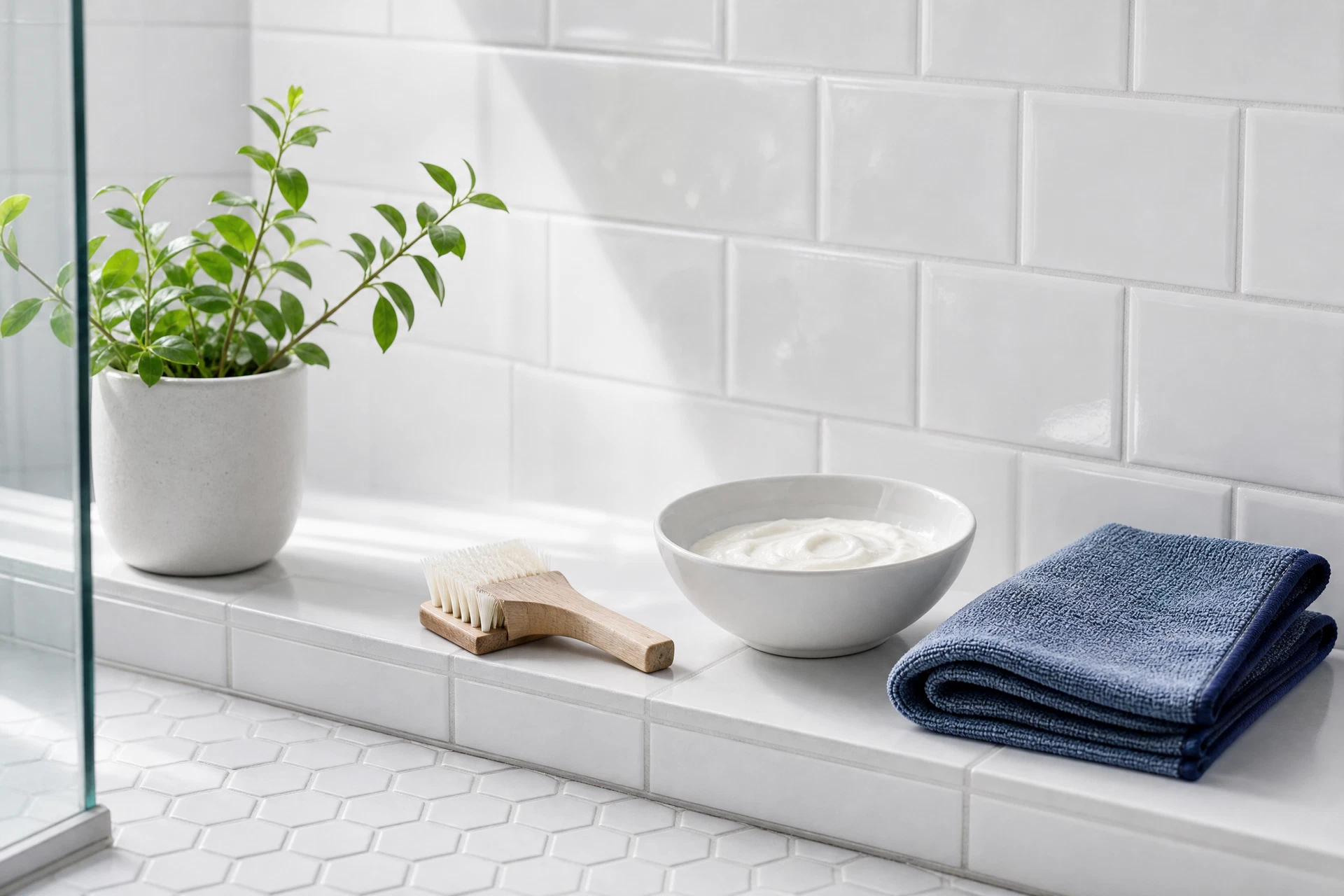
Use a pH-neutral tile cleaner or a mild paste suitable for the materials in your shower. Apply only enough to cover the grout and respect the product’s contact time.
Brush with light, controlled pressure
Use a soft nylon grout brush or old soft toothbrush. Work in short sections with small circular motions instead of bearing down on one spot.
Rinse completely and dry the area
Rinse away cleaner and loosened residue with clean water, then wipe the tile and grout dry. Leftover product can attract more film or leave streaks.
Reduce future buildup with a short routine
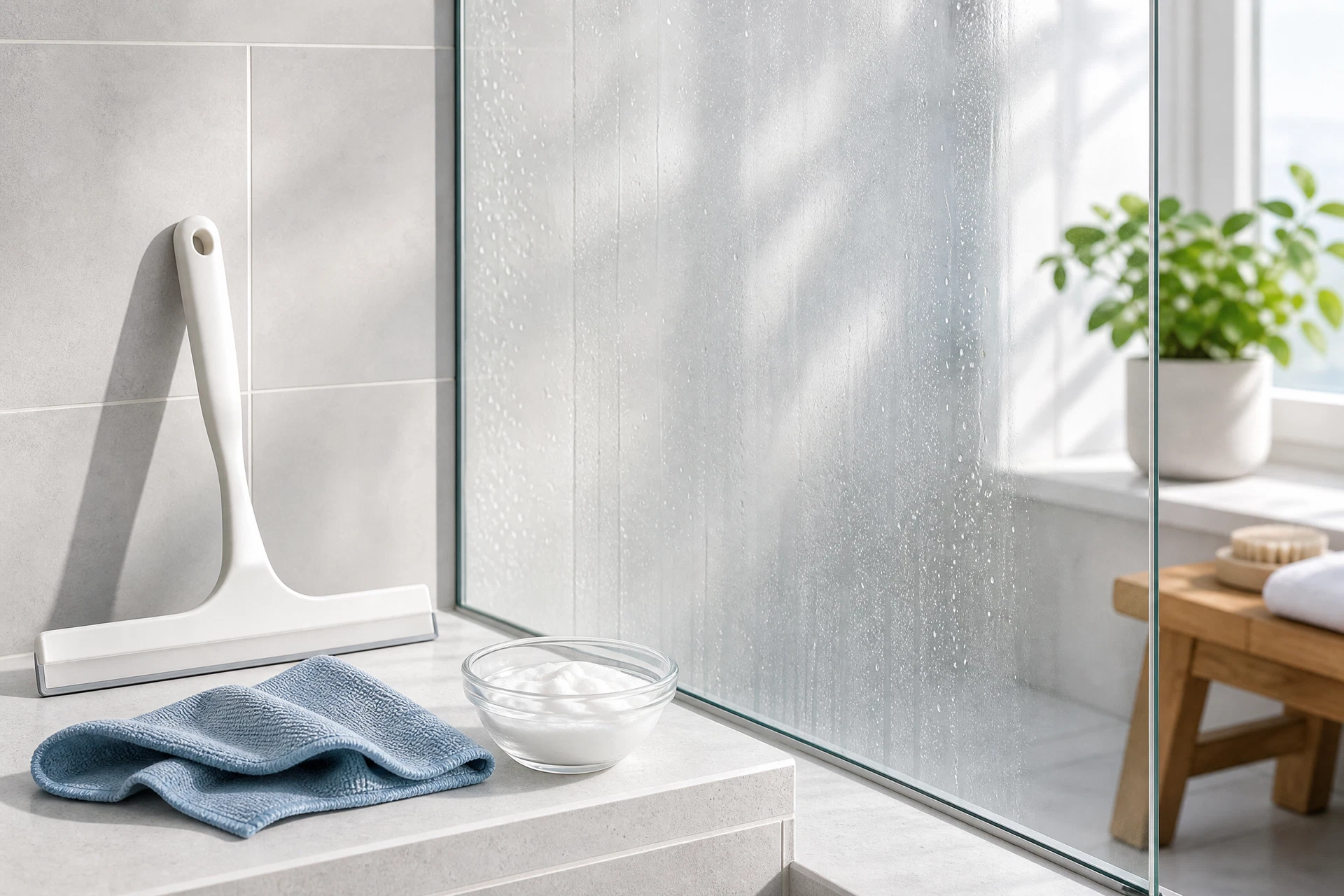
Use a squeegee or towel after showers, keep ventilation running, and clean small areas regularly so grime does not become a restoration project.
Helpful tips
- Use a separate brush for grout so abrasive residue from other chores does not transfer.
- Work from the top of a wall downward to avoid re-soiling cleaned lines.
- Photograph an inconspicuous test patch if you are comparing methods over several sessions.
Common mistakes
- Using a wire brush or harsh abrasive pad.
- Combining cleaners or applying one product over residue from another.
- Scrubbing cracked or crumbling grout as if it were ordinary surface dirt.
Before you continue
- Do not mix bleach with ammonia, acids, or other cleaners.
- Stop and seek qualified help if grout is soft, missing, or repeatedly darkens from moisture behind the tile.
When the first attempt does not work
The grout looks the same after cleaning. What should I do?
It may be stained rather than dirty. Let the surface dry fully, then assess whether a grout-specific restoration product or professional evaluation is appropriate instead of escalating with harsher chemicals.
Dark spots return quickly after cleaning. Why?
Persistent moisture, poor ventilation, or damaged caulk can keep the area damp. Improve drying and inspect for cracks or leaks rather than repeatedly applying stronger cleaner.
Continue with a related guide
Questions answered
Can I use a toothbrush on shower grout?
A clean, soft toothbrush can be suitable for gentle scrubbing. Avoid stiff or wire bristles that can erode the grout surface.
How often should I clean shower grout?
A light routine clean every week or two and quick drying after use can prevent the need for aggressive deep cleaning.
Does sealing grout mean I never need to clean it?
No. A suitable sealer can reduce absorption, but it does not prevent soap film, mineral deposits, or ordinary surface dirt.
This guide is general informational content. It does not replace professional advice for legal, medical, financial, safety, or other consequential decisions.