Quick answer
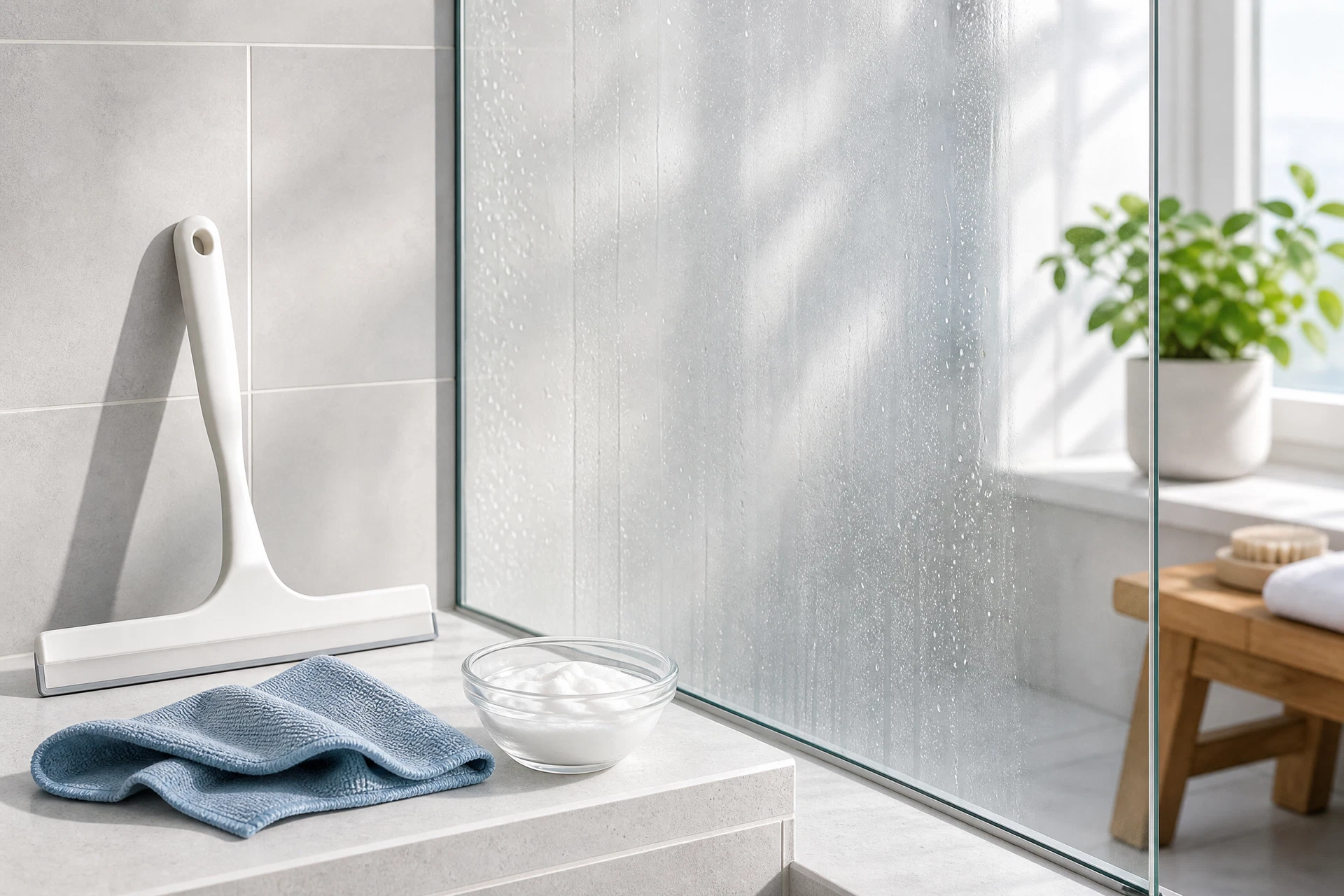
Wet the glass, test a glass-safe mineral-deposit cleaner or mild acidic method on a small area, wipe with a non-scratch cloth, rinse, and dry with a squeegee. If cloudy marks do not change, they may be etched glass rather than removable mineral film.
Hard water leaves minerals behind as shower water dries. Early film is usually removable; older, cloudy marks can become etched into the surface, so gentle testing is more useful than aggressive scrubbing.
Step-by-step
Check whether the glass is coated
Some shower doors have a factory coating with specific care instructions. Read any label, manual, or installer guidance before applying a cleaner.
Wet the glass and test a hidden spot
Work on cool glass, not a hot door. Test a glass-safe method in a corner and look for changes in clarity, sheen, or coating behavior.
Apply the chosen cleaner briefly
Use only the contact time on the product label or a mild, tested approach. Keep cleaner off adjacent natural stone, metal, and porous surfaces where it may cause damage.
Wipe with a non-scratch cloth
Use a microfiber cloth or other non-abrasive tool in overlapping passes. Do not use steel wool, razor blades, or scouring pads unless the door maker specifically permits them.
Rinse and dry completely
Remove all cleaner with fresh water and dry the door with a squeegee or towel. Drying reveals whether the marks have actually changed.
Build a prevention routine
Squeegee after showering, improve ventilation, and clean light film before it becomes a thick deposit. This is usually easier than repeated deep cleaning.
Helpful tips
- Treat one small panel at a time so cleaner does not dry on the glass.
- Use a dedicated shower squeegee that is clean and flexible.
- Check hardware and seals for leaks that keep mineral-rich water on the door.
Common mistakes
- Using an abrasive pad to chase stubborn cloudiness.
- Letting acidic cleaner sit on metal frames or stone nearby.
- Assuming every cloudy mark is removable buildup rather than etched glass.
Before you continue
- Never combine cleaning products.
- Stop if a protective coating seems to change or the surface feels rough after a test.
When the first attempt does not work
The stains did not improve after a careful test. What now?
They may be etched or beneath a damaged coating. Stop escalating abrasives and ask the shower-door manufacturer or a glass-care professional about suitable restoration options.
The stains return within days. Why?
New mineral film forms whenever water dries on the glass. A quick squeegee and airflow after showers usually matter more than using stronger cleaner.
Continue with a related guide
Questions answered
Are hard water stains permanent on shower glass?
Fresh mineral film is often removable. Long-standing marks can etch the surface and may not respond to ordinary cleaning.
Can I use a razor blade on shower glass?
Do not use one unless the shower-door manufacturer explicitly permits it. Blades can scratch glass or damage protective coatings.
What prevents hard water stains best?
Removing water from the glass after each shower and allowing the area to dry reduces mineral deposits before they build up.
This guide is general informational content. It does not replace professional advice for legal, medical, financial, safety, or other consequential decisions.