Quick answer
Check the shoe material and care label, remove loose dirt, test a mild soap solution on a hidden spot, clean with a soft brush or cloth, wipe away residue, and air-dry away from direct sun and heat. Avoid chlorine bleach, which can yellow or weaken many materials.
White shoes show soil quickly, but aggressive cleaning can leave fabric yellowed, leather dry, or glued parts weakened. The most reliable method is gentle, material-aware cleaning followed by slow air-drying.
Step-by-step
Identify the shoe material and remove laces
Check the label or product guidance for canvas, leather, mesh, suede, or synthetic material. Remove laces and insoles if they are designed to come out so you can clean each part safely.
Brush away loose dirt while the shoe is dry
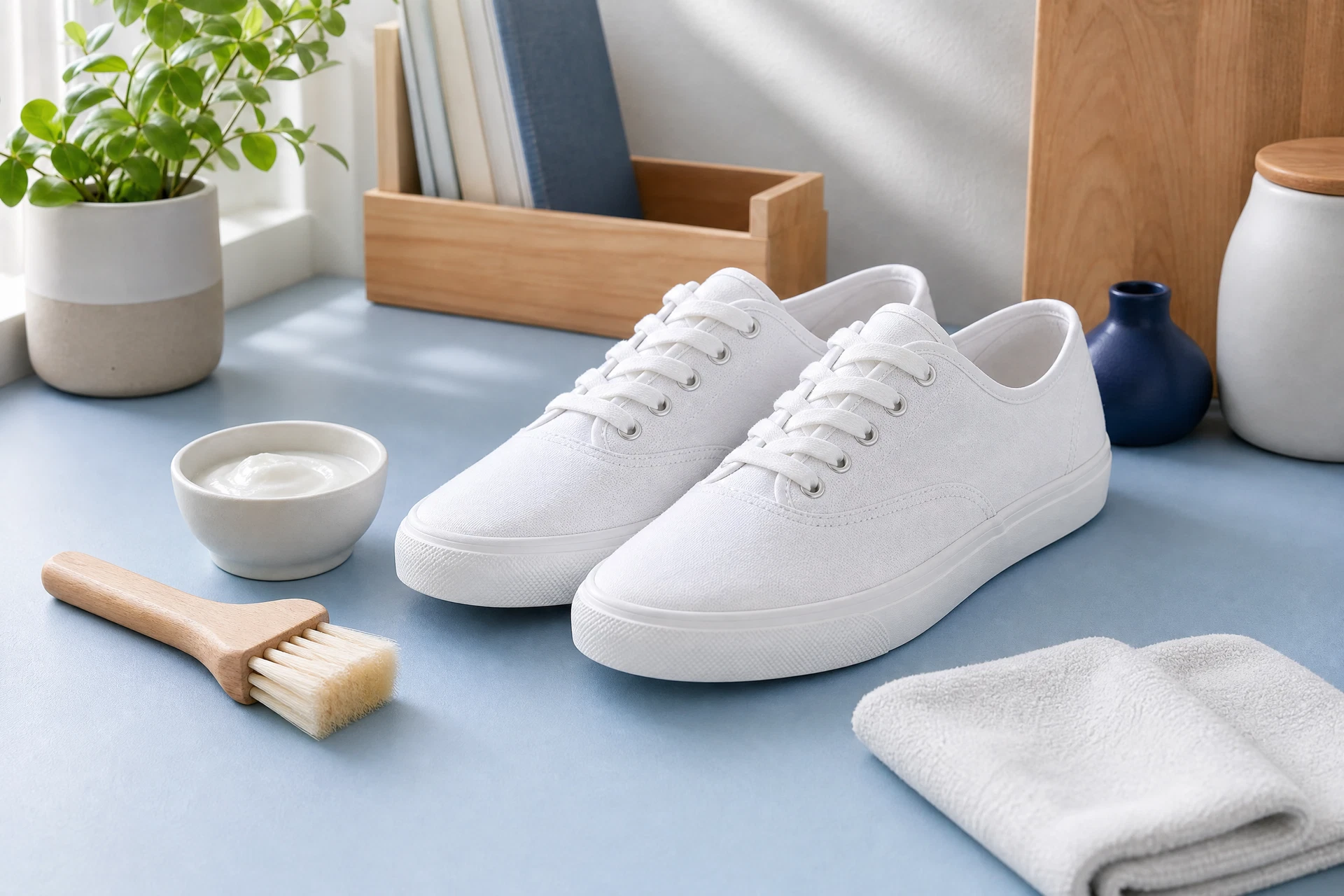
Use a soft brush to remove dust and dried mud from uppers, seams, and soles. Starting dry prevents grit from becoming a scouring paste.
Test a mild cleaner on a hidden area
Mix a small amount of mild soap with water and test near the tongue or another low-visibility spot. Stop if color, texture, or finish changes.
Clean the upper with light pressure
Use a soft cloth or brush suited to the material. Work in small circles on fabric and gentle wipes on leather-like surfaces; do not saturate the shoe.
Wipe away soap and clean the sole separately
Use a clean damp cloth to remove residue, then clean rubber soles with a separate soft brush. Keep dirty sole residue off the white upper.
Air-dry away from heat and strong sunlight
Stuff shoes loosely with clean paper to help them hold shape and dry indoors with airflow. Do not use a dryer, radiator, or direct sun, which can cause yellowing or damage.
Helpful tips
- Treat fresh marks quickly before they work deeper into fabric.
- Use separate cloths for the upper and rubber sole.
- Keep a small soft brush dedicated to shoes so it stays free of abrasive grit.
Common mistakes
- Using chlorine bleach on unknown shoe materials.
- Soaking the shoes until glued areas stay wet for hours.
- Drying white shoes on a hot radiator or in direct midday sun.
Before you continue
- Suede, nubuck, and specialty leather need material-specific products; do not use a generic wet-cleaning method.
- Stop if color transfers to the cloth, a glued seam lifts, or the material becomes rough after your test.
When the first attempt does not work
My white shoes look yellow after drying. What happened?
Yellowing can come from bleach, leftover cleaner, heat, sun exposure, or material aging. Rinse residue gently, let the shoes dry in shade, and use a material-specific approach rather than repeating harsh cleaning.
The stain will not come out. Should I scrub harder?
No. More force can damage fibers or finish. Identify the shoe material and stain type, then use a method designed for that material or consult a shoe-care professional.
Continue with a related guide
Questions answered
Can I put white shoes in the washing machine?
Only if the manufacturer permits it. Machine washing can affect shape, glue, leather, and specialty materials, so hand-cleaning is the safer default.
Why should I avoid bleach on white shoes?
Bleach can yellow fabrics, weaken fibers, and affect adhesives or finishes. A mild tested cleaner is usually a safer starting point.
How do I keep white shoes white longer?
Brush off dry dirt, spot-clean fresh marks, let shoes dry fully between wears, and avoid harsh heat or cleaners that can discolor materials.
This guide is general informational content. It does not replace professional advice for legal, medical, financial, safety, or other consequential decisions.