Quick answer
Start by checking for trapped fabric or debris, then gently clean and align the zipper teeth. Move the slider slowly from the bottom, supporting the fabric. If teeth are missing, the slider is cracked, or the zipper separates repeatedly, the durable fix may require replacement or professional repair.
A zipper that will not close is often blocked by fabric, bent teeth, or a worn slider. Rushing or yanking can make a small issue worse, so inspect the zipper before trying any lubricant or force.
Step-by-step
Lay the item flat and inspect both sides
Open the zipper as far as it will safely go and look for loose threads, fabric, lint, or a tooth that sits out of line. Good light makes a simple snag easier to spot.
Free trapped fabric without pulling hard
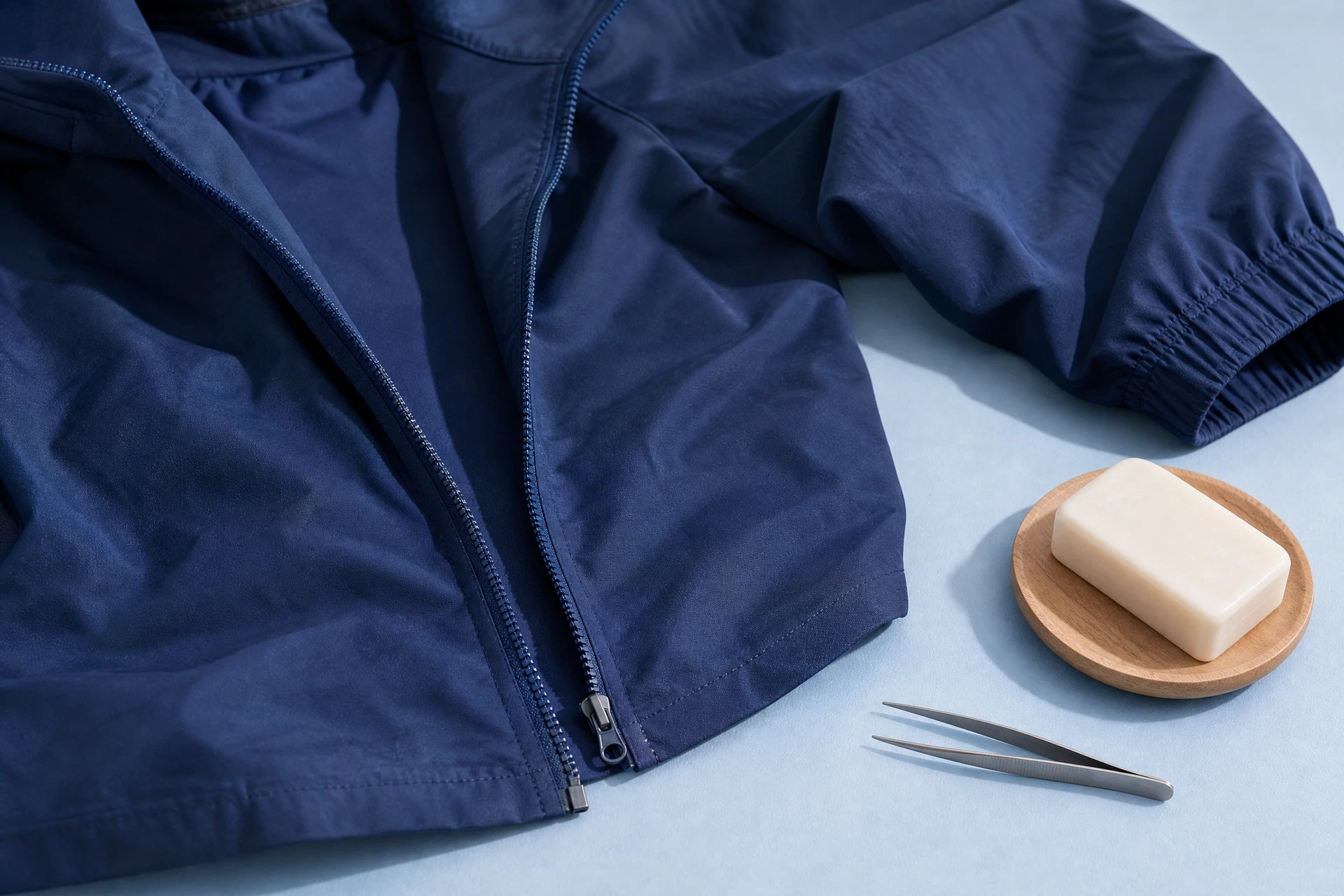
Hold the fabric close to the snag and gently back the slider away. Use fingers or a blunt tool to tease threads free; do not cut near the zipper unless you can clearly see what you are trimming.
Clean visible debris from the teeth
Use a soft dry brush to remove lint and grit. For a garment zipper, make sure the item is dry before testing again.
Align the zipper and test in short movements
Bring both sides together at the bottom and move the slider a small distance at a time. Keep the fabric flat so tension does not pull teeth away from each other.
Use a zipper-safe approach only if needed
If the slider moves stiffly after debris is removed, use a product or method suitable for the item and zipper type. Test a small area and keep substances away from delicate fabrics.
Decide whether repair is still realistic
Stop if teeth are missing, the slider is cracked, the zipper tape is torn, or the zipper separates after closing. These signs often need replacement rather than repeated home adjustment.
Helpful tips
- Zip jackets and bags before washing so teeth are less likely to catch.
- Support both sides of a long zipper when closing it under tension.
- Keep a garment repair kit for loose threads, but use it cautiously around zipper tape.
Common mistakes
- Pulling the slider forcefully against a fabric snag.
- Bending teeth repeatedly with pliers.
- Applying an oily product to a fabric without testing for staining.
Before you continue
- Keep sharp tools away from your hands and from the zipper tape.
- For safety gear, luggage carrying valuables, or technical garments, consider professional repair if closure reliability matters.
When the first attempt does not work
The zipper closes but separates behind the slider. Why?
The slider may be worn or the teeth may not be engaging correctly. Avoid crushing the slider with tools; replacement is often more reliable than repeated squeezing.
The zipper is stuck at the bottom. What should I do?
Check for fabric caught in the slider and gently back it away. If the bottom stop or tape is damaged, do not force it; the zipper may need repair.
Continue with a related guide
Questions answered
Can a broken zipper slider be fixed at home?
A simple snag or debris issue can often be handled at home. A cracked, loose, or repeatedly separating slider may need replacement for a durable result.
Why does a zipper get stuck?
Common causes include trapped fabric, lint, bent teeth, corrosion, or a worn slider. Inspection helps you choose a safe next step.
Should I use pliers on a zipper?
Pliers can easily bend or damage a slider and teeth. Use them only if you understand the repair and the item can tolerate the risk; otherwise seek a repair professional.
This guide is general informational content. It does not replace professional advice for legal, medical, financial, safety, or other consequential decisions.