Quick answer
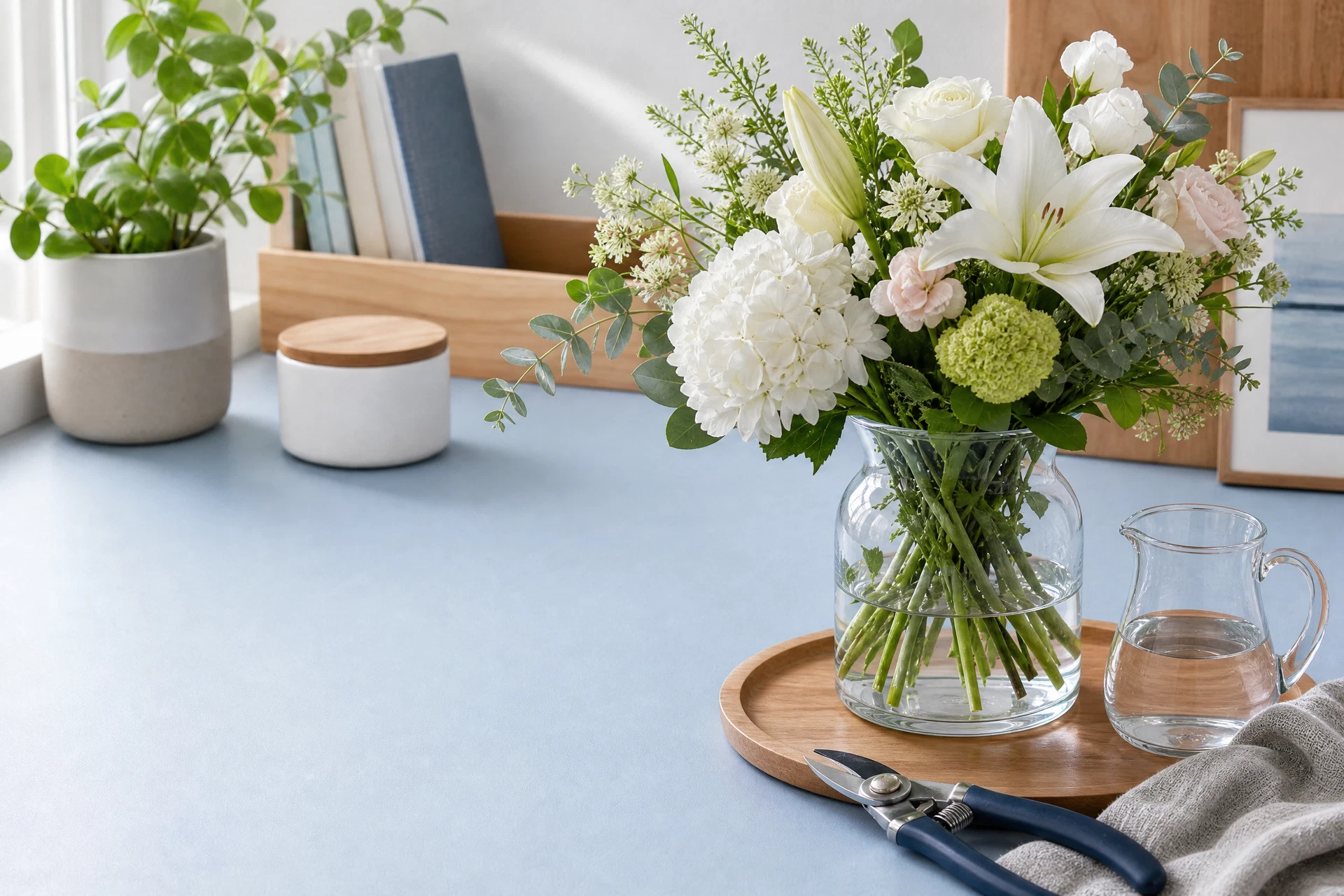
Use a clean vase, fill it with fresh water, trim stems with clean shears, remove leaves below the waterline, and place flowers away from heat and direct sun. Change the water regularly and remove fading stems promptly.
Cut flowers last longer when bacteria, heat, and crowded stems are controlled. The basics are simple, but doing them consistently matters more than adding unverified household mixtures to the vase.
Step-by-step
Wash the vase thoroughly
Clean the vase with hot soapy water, rinse it well, and dry if possible. A clean vessel starts with less residue that can cloud water and shorten stem life.
Fill with fresh water and any packet as directed
Use clean water and follow the instructions for any flower-food packet supplied with the bouquet. Do not improvise mixtures that may affect water quality or pets.
Trim stems with clean, sharp shears
Cut a small amount from each stem at an angle with clean tools. Avoid crushing stems with dull scissors, which can make water uptake harder.
Remove leaves below the waterline
Any submerged leaves break down quickly. Strip only the leaves that would sit in the water, keeping the rest of the foliage for the arrangement.
Choose a cool, stable location
Keep the vase away from direct sun, heat vents, ripening fruit, and drafts. A cooler room usually slows wilting better than a bright hot window.
Refresh water and inspect flowers
Change the water and rinse the vase every couple of days or sooner if it looks cloudy. Re-trim stems when needed and remove fading blooms so they do not affect the display.
Helpful tips
- Use a vase wide enough that stems are not compressed together.
- Keep bouquets away from fruit bowls, which can release gases that speed aging.
- Group flowers with similar water needs when arranging mixed stems.
Common mistakes
- Leaving leaves submerged in the vase.
- Topping off old cloudy water instead of replacing it.
- Placing flowers above a radiator or in strong direct sun.
Before you continue
- Keep toxic flowers and plant food out of reach of pets and children.
- Discard vase water safely; it can contain bacteria and residues from plant food.
When the first attempt does not work
My flowers wilted the day after I brought them home. What can I check?
Check for a dry foam base, cloudy water, crushed stems, heat exposure, or flowers that were already aging at purchase. Recut stems and refresh water if the stems are still firm.
Why is the vase water cloudy so quickly?
Bacteria from a dirty vase, submerged leaves, or warm placement can cloud water. Wash the vase, remove foliage below the waterline, and refresh the water more often.
Continue with a related guide
Questions answered
Should I add sugar or bleach to flower water?
Use the flower-food packet and the florist’s instructions when available. Unverified mixtures can encourage bacteria or create household-safety concerns.
How often should I change cut-flower water?
Every couple of days is a useful baseline, and sooner if the water turns cloudy or the arrangement is in a warm room.
Do cut flowers last longer in the fridge?
Cool conditions can slow aging for many flowers, but household refrigerators contain food odors and vary by flower type. Follow florist guidance for delicate arrangements.
This guide is general informational content. It does not replace professional advice for legal, medical, financial, safety, or other consequential decisions.